
Weapons of the Irish War of Independence
Kieran E. Mc Mullen
Have you ever considered the crucial importance of weapons in the amazing struggle for freedom in Ireland? Let Kieran McMullen, retired army Lieutenant colonel of field artillery, veteran of Operation Desert Storm and Korean DMZ, guide you in his book, ‘Weapons of The Irish War of Independence’, from Kilmainham Tales.
Illustration Pg. 8
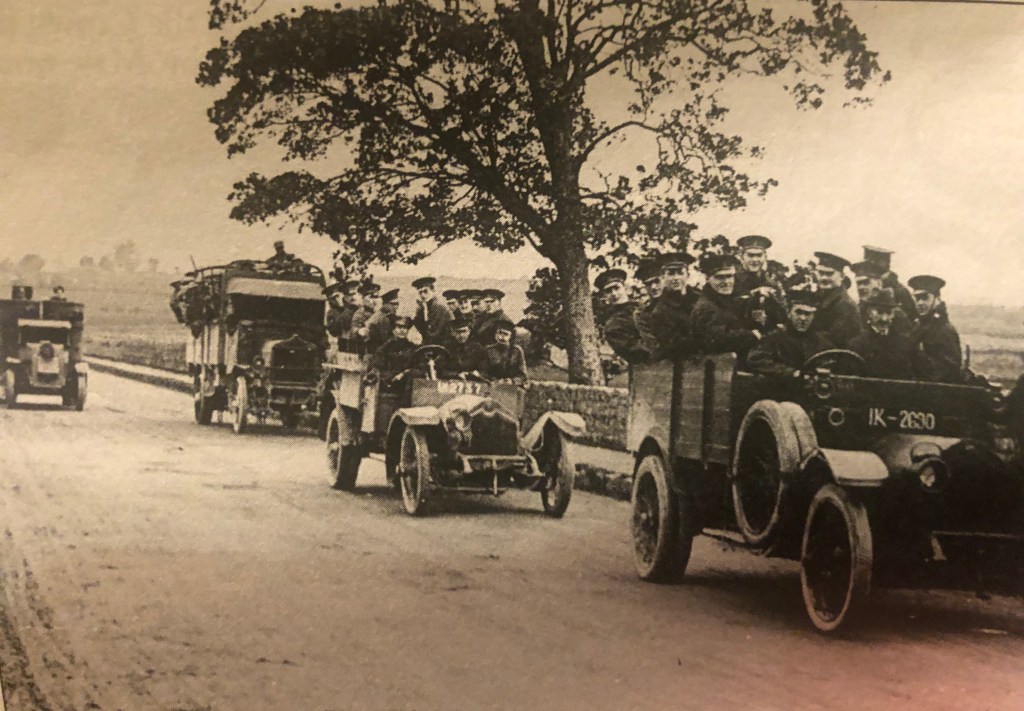
Kieran Explains how the Crown Forces were well armed with every weapon they could need and plentiful supplies of ammunition while The Irish struggled, stealing, importing, smuggling guns often hidden in bags of oats from Belfast. Handguns, both revolvers and semi-automatics, were the preferred weapons in the cities. The long gun was the weapon of choice in the countryside.
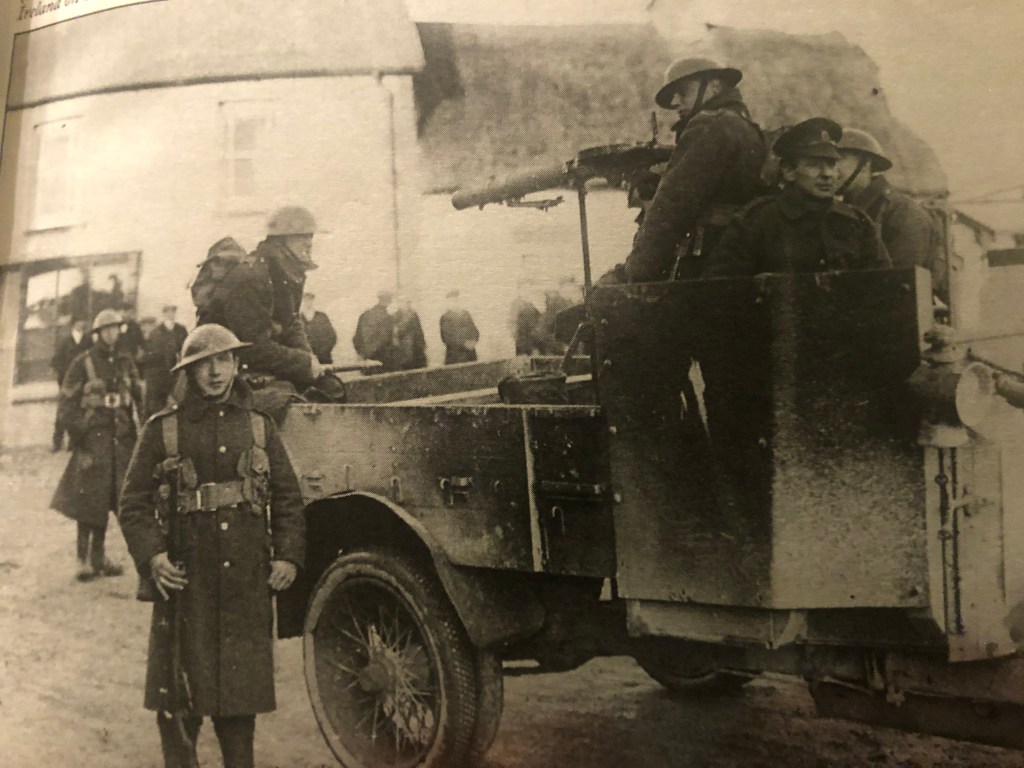
The British introduced the armoured car onto the streets of Dublin in 1916, a cobbled-together quick fix of Guinness lorries and railroad boilers crushing ‘through the doors of Irishmen.

Kieran, a trained shooting firearms instructor with a long career in law enforcement, vividly describes how shortage of ammunition led the Irish to ‘point and shoot’ rather than ‘aim and fire’. Not for them the luxury of firearms practice. They had to take whatever weapon they were given.
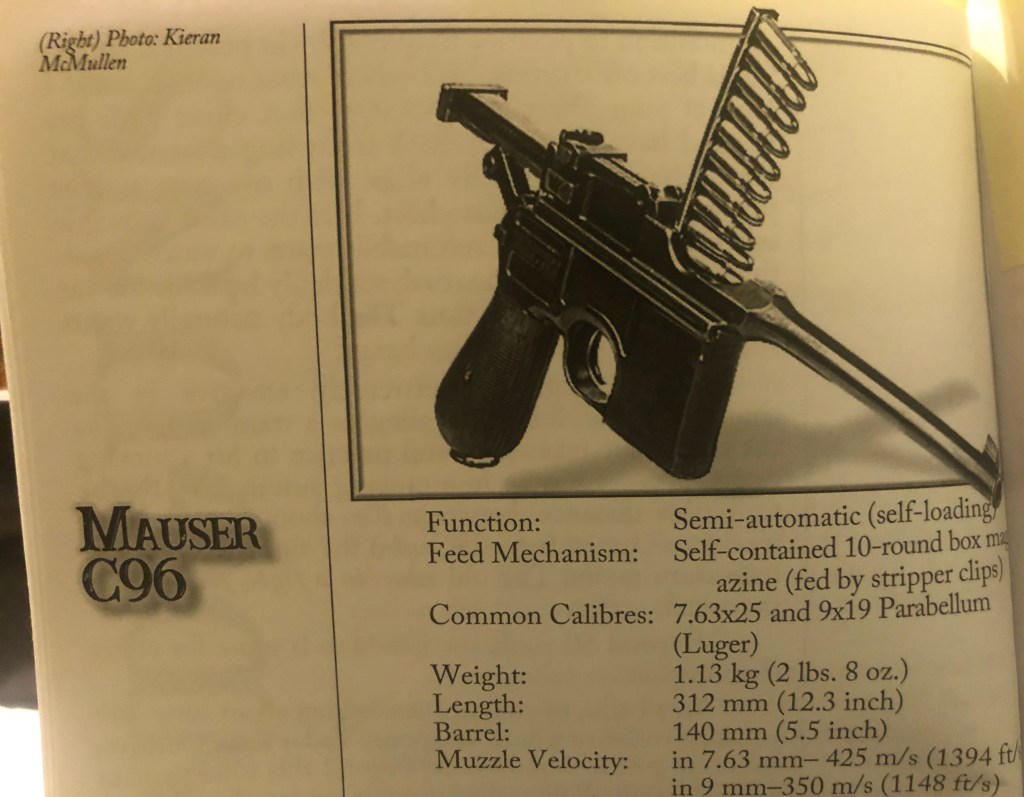
The famous ‘Peter the Painter’, Mauser C96, Kieran reveals was named after the Latvian anarchist who outgunned the London Metropolitan Police at the famous Siege of Sydney Street. Cathal Brugha selected it when he went to the visitors’ gallery in the House of Commons in April and June of 1918. Vinnie Byrne of ‘The Squad’ used it to execute two British Intelligence officers on Bloody Sunday.
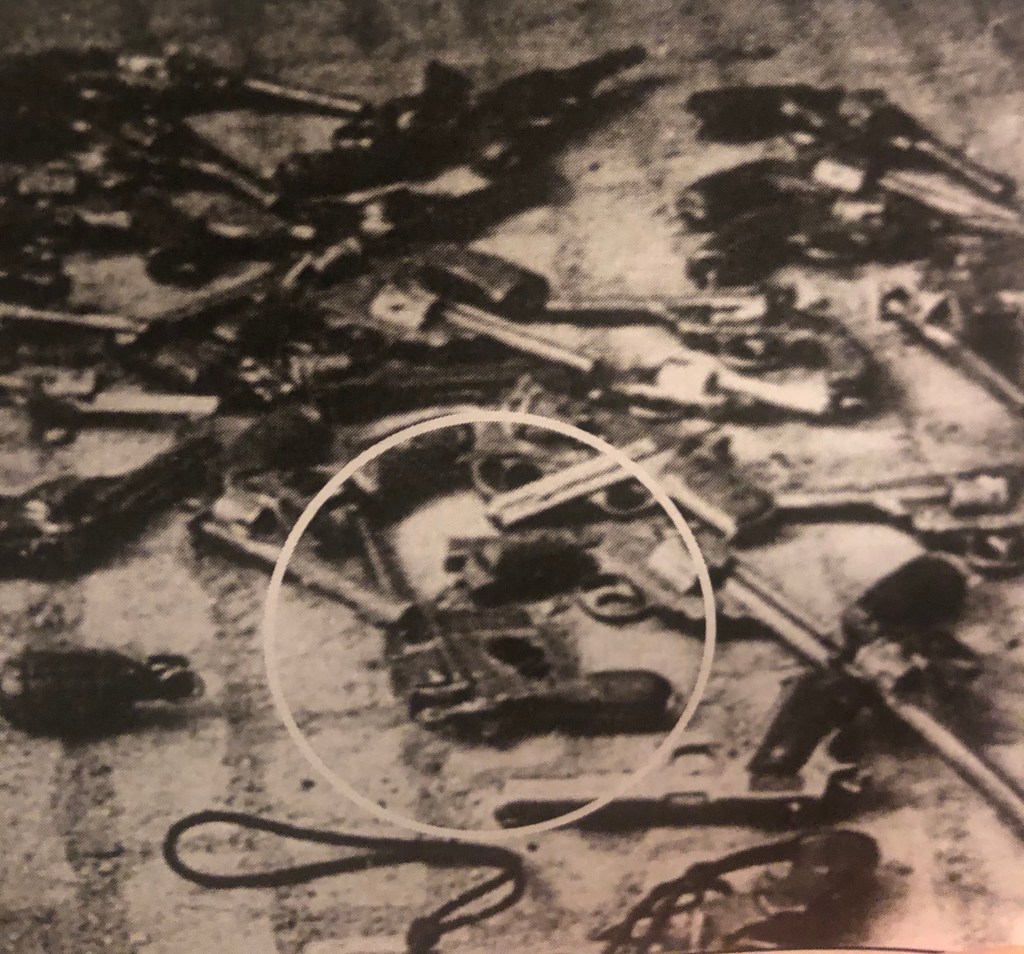
Here is a picture of the weapon Byrne threw down before his capture at the Burning of the Customs House. It was also chosen by Ernie O’Malley when he went round Ireland as GHQ Organiser.
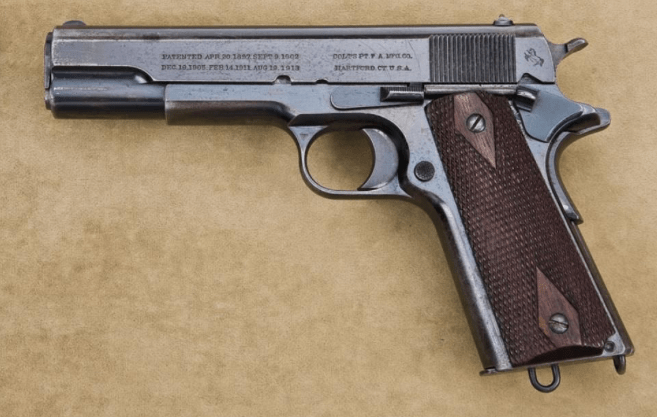
The Colt Model 1911 is ‘one of the safest hand-guns in the world’. One of executed leader Joseph Plunkett’s brothers carried it. This gun was a favourite with the British Army Officers and became a prize to be taken by the IRA in ambushes or raids. Sean Doyle took one from under the pillow of a British officer who was an unfortunmate casualty of Bloody Sunday.
Plunkett had a close call after a daring raid on a mail van. Standing in Peadar Clancy’s shop in Talbot Street, with the pistol tucked into his waistband, he was suddenly surrounded by a raiding party of Military and DMP. There was no back door. Quick-thinking Clancy calmly asked the officer in charge if he could finish serving his ‘customer’, Plunkett. He wrapped up a couple of shirt collars and told his ‘customer’ that he could pay another time.
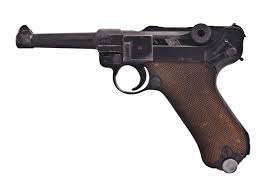
Another infamous firearm was the Parabellum P-08 or Luger, the standard firearm of the German Army. However it is susceptible to dirt and sensitive to ammunition. If the ammunition is too ‘hot’ the toggle moves too quickly and the cartridge… may become jammed in the chamber, causing failure to extract or feed a new round’.
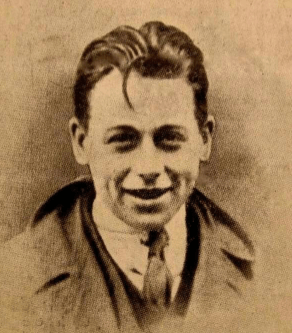
Kevin Barry arrived late for the Ambush at Monks’ Bakery and was issued with a Parabellum. He ‘was not happy’. When they held up the lorry, they were outnumbered, 20 to 13. The Volunteers withdrew and regrouped in Cathedral Street only to discover Barry was missing. ‘Kevin’s gun jammed and he went down under the lorry to fix it. Only one shot fired… if you have not all the ammunition with the same mark and date it causes a jam’. Barry was captured and subsequently executed.
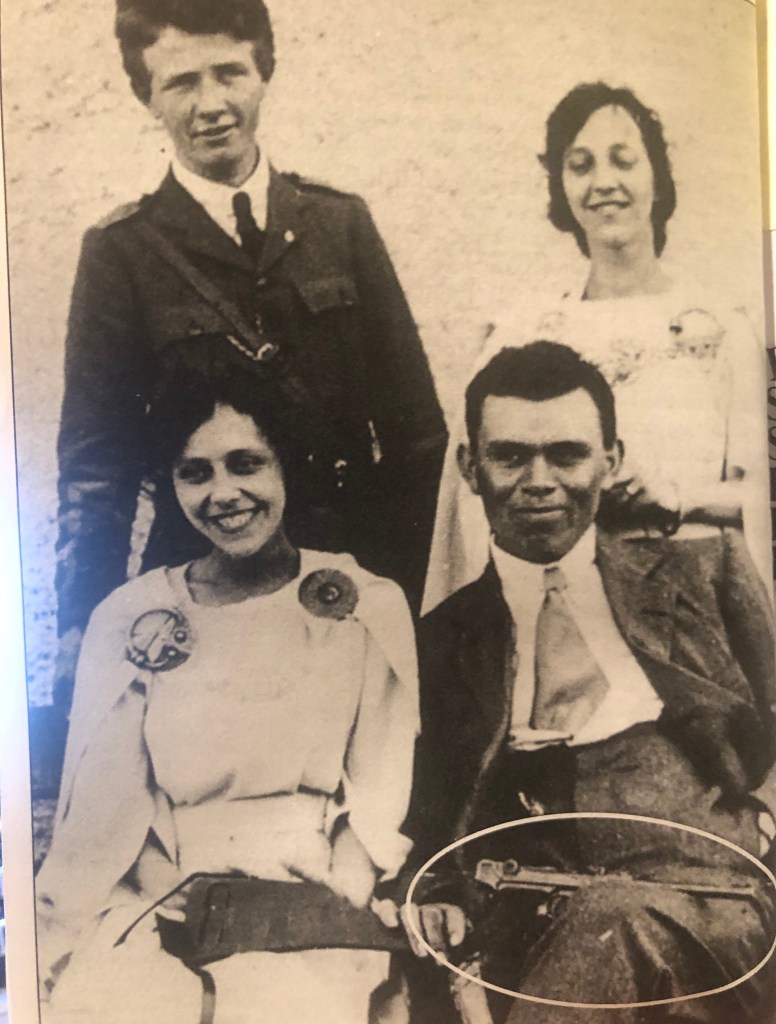
Dan Breen proudly displays his Artillery Model Luger at his wedding to Brigid Malone.
Kieran’s encyclopaedic knowledge of historical weapons and his comprehensive knowledge of Irish history result in an accessible fascinating insight into the weapons used on all sides in the bloody struggle for Irish Independence 1916-21.
Available from Kilmainham Tales.http://kilmainhamtales.ie/kts-09—weapons-of-the-irish-war-of-independence.php
Available from http://www.books.ie/weapons-of-the-irish-war-of-independence

 Easter Rising Stories