
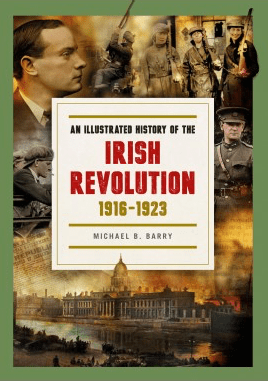
An Illustrated History of the Irish Revolution 1916-1923
Michael B. Barry
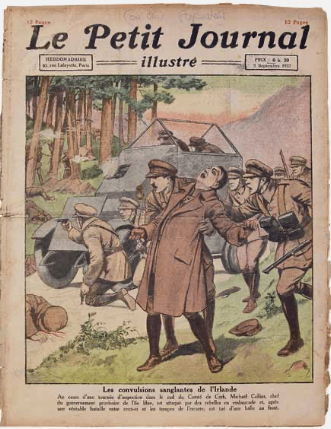
The newest instalment of Michael Barry’s visual insight into 1916-23 certainly exceeds expectations. The Irish Revolution’s difficult struggle to wring independence from the most powerful force in the world at that time, the British Empire, is told in a richly visual manner through 5 chapters; Freedom’s Long March, 1916, War of Independence, Truce and Civil War in the 368 page ‘An Illustrated History of the Irish Revolution 1916-1923 by Michael B. Barry. Skilfully colourised photographs by John O’ Byrne bring both the important personalities and ordinary people to life. Specially created maps show the complicated manoeuvres of Lowe and Barry. The nuances and details of seminal events like the killing of Michael Collins are explored while continental periodicals vividly show the struggle’s impact in other countries.
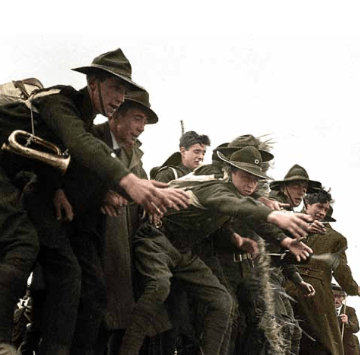
The subjugation of Ireland is traced from ‘The Marriage of Strongbow and Aoife’ to King William’s victory at the Battle of the Boyne which tightened the iron grip on Ireland. Emmet’s execution, the rise of the Fenian Brotherhood and the arming of the UVF in 1914 follow in quick succession. The enthusiasm and energy the young Fianna as the strive to help unload the precious cargo of the ‘Asgard’ is vividly depicted in colour. A detailed map shows the tight cordon set up by the British General W. Lowe when he positioned 4,600 troops to surround the Irish garrisons in 1916. Their positions are circled in red. The heavy cost of the struggle is depicted in heart-wrenching illustrations of the funerals of two hunger-strikers, Thomas Ashe and Terence Mac Sweeny .

“An Illustrated History of the Irish Revolution 1916-23”
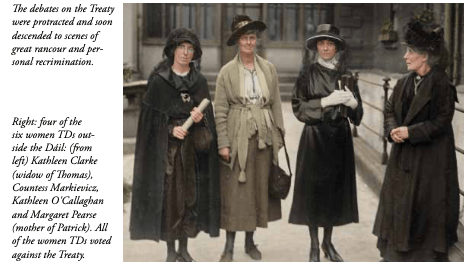
The formidable Countess Markievicz illustrates the role of women in the conflict. First shown captured in Richmond Barracks after the surrender of the Royal College of Surgeons, she then sits in a prison van after her sentence of death has been commuted to penal servitude for life. Yet she emerges triumphant after her release campaigning vigorously on behalf of Sinn Féin at the Kilkenny by-election in 1917. The important contribution of women at the dawn of the Republic is seen in the photo of 4 of the 6 women TDs outside the Dáil who all voted against the Treaty.
A lesser known Sinn Féin plot to spread typhoid among British troops in the War of Independence is graphically illustrated . Both Mulchay and Collins regarded it as a ‘joke’ and it was about to go into the waste paper basket when a raid occurred. The British were not believed when they levelled charges about the plot because they had form in spreading black propaganda. Bloody Sunday soon eclipsed this story.

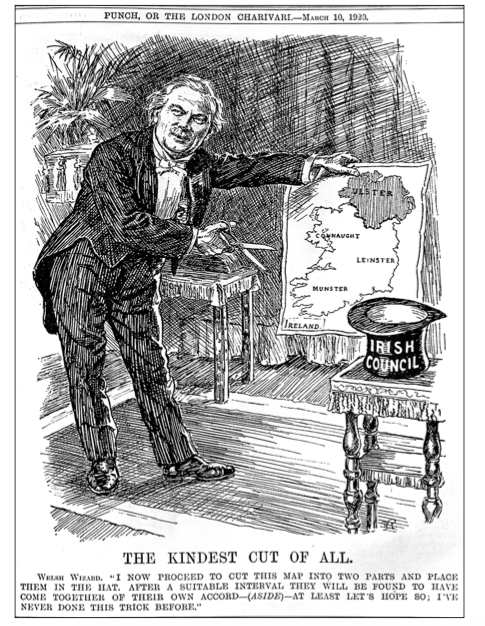
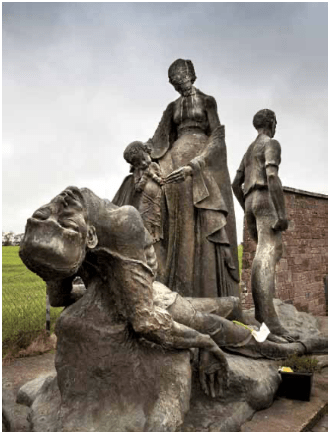
Contemporary cartoons provide a sharp commentary on events. Lloyd George’s 1920 partition trickery, giving the Unionists precisely what they wanted reverberates to this day. The savage Civil War is bright into sharp focus when Government troops pose outside the Granville Hotel with a mine which they have just disabled. A series of photographs of derailed locomotives and blown-up bridges show the devastation of the times. The stunning Ballyseedy Monument depicts the lowest point of the war when nine prisoners were blown up with a mine by the Free Staters. General Mulcahy salutes at the stand-down ceremony and the book concludes with a quiet image of the most visited grave in Glasnevin.
Barry created this impressive work which contains 800 images after ten years of careful research at home and abroad. He details the events of the Irish struggle for independence sequentially and includes a useful timeline and comprehensive glossary and bibliography. An enjoyable read, this accessible visual feast would appeal not only to young history students who are discovering these events for the first time, but also to those who need a scholarly reference book for Irish history. Barry’s keen eye is honed by his background in engineering. The Irish academy of engineering has awarded him for his ‘outstanding contribution o engineering heritage in Ireland.’
His other books include the trilogy: ‘Courage Boys, We are Winning, an Illustrated History of the 1916 Rising’, ‘The Fight for Irish Freedom, an Illustrated History of the War of Independence’ and ‘The Great Divide, an Illustrated history of the Irish Civil War’.
Available from books.ie and Bookdepository.com and Easons.com

 Easter Rising Stories