

‘Searching for Seán: Remembering Sean Treacy 100 Years On’
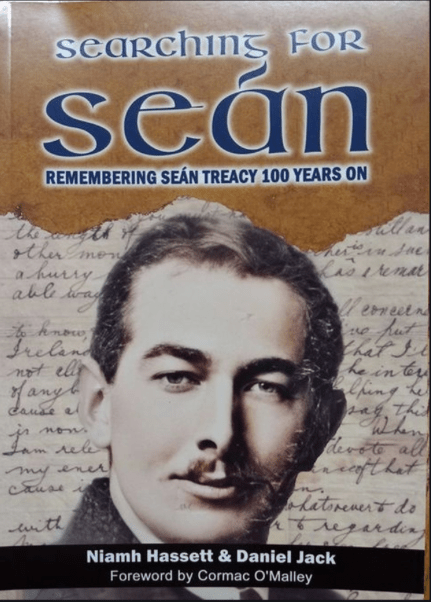
This 160 page commemorative publication takes a fresh look at a man dubbed ‘The Greatest Fighter in Ireland’. Written by Niamh Hassett, daughter of the renowned late historian, John Hassett, and Daniel Jack, relative of Séumas Robinson who fought alongside Treacy and Dan Breen, it also features an insightful foreword by Cormac KH O’Malley, son of Ernie O’Malley, Seán’s friend and comrade in arms. Cormac states, ‘These men all knew the struggle that lay ahead of them, the personal and physical sacrifices… but there was an over-riding objective – an Ireland free of English control and an Ireland ruled by Irish men and women’.
This accessible publication covers Treacy’s early life and influences, major events in the struggle for Irish freedom including Soloheadbeg, Knocklong, daring attacks on barracks, the dramatic escape in Drumcondra and the tragic shoot-out in Talbot Street, Dublin in 1920. Both well- known freedom fighters and lesser-known characters lend their voices to the exciting narrative. Contemporary newspaper accounts and Treacy’s own words bring to life the dramatic struggle for freedom.
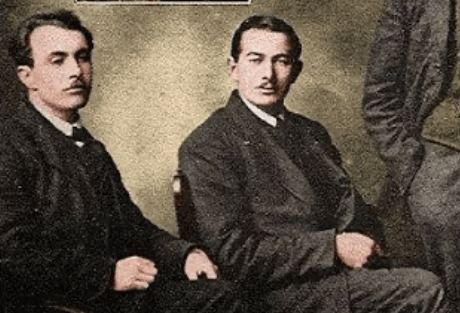
Treacy’s force of character is recalled by his great friend and comrade, Dan Breen, ‘To Treacy any problem submitted was never approached as “Can it be done?” but rather “How can it best be done?”’ Although he had been bitterly disappointed by the inaction in the Tipperary region in 1916, because of Eoin MacNeill’s countermanding order, he was determined to hold the thread of an organisation together. His home became ‘a nest of cunning hiding places for military equipment and secret documents’. He studied military manuals and soon acquired a reputation for experimenting with explosives.
Always one to use time productively, when arrested in Tipperary town for taking part in a rally for Eamon De Valera, he spent his days in Mountjoy Prison studying Irish, shorthand, military matters and extending his knowledge of explosives. Re-arrested and incarcerated in Dundalk Gaol, he began a hunger strike to enact the conditions for prisoners won in Mountjoy. Treacy’s own words highlight his sterling personality. He wrote to his comrade Maurice Crowe instructing him to begin guerrilla warfare in South Tipperary, ‘Take the enemy by surprise. Hit first and don’t let him hit you. Burn barracks. Use gelignite bombs if procurable. Show no mercy to resisters’.
34 black and white photos featuring his home, school, important documents, local newspaper accounts, planning maps, important characters and memorabilia, bring the Treacy story into sharp focus, vividly forging the strong link between Tipperary and Dublin in the life of the ‘cool, calm and collected figure of Seán Treacy’. His analytical account of the attack on Holyford is included, ‘Attack on barracks commenced about 3am with 8 rifles…on the roof threw in grenades and fired through roof. Peelers driven out of half of barracks and that half burned’. He candidly details the causes of the failure of the attack, ‘commenced too late – about half an hour before daylight… too much shouting and threatening to peelers which may have made them afraid to surrender’.
The action moves to Dublin. Captain Jeune, a British Intelligence officer recalls how ‘Major Smyth had come from India to avenge his brother’s murder… we went on chance to Professor Carolan’s house, Fernside, Dublin’. Dan Breen vividly describes the ferocious raid, ‘Crack! Crack! Two bullets came whizzing through the door!’ Treacy provided covering fire for Breen’s escape. The Evening Herald reported that ‘one of the men was actually suspended by one arm from a beam of wood of the conservatory roof when bullets whizzed past him’. Longing for news of Breen, Treacy went to the Republican Outfitters Store on Talbot Street. Tensions were running high in the city because of the funeral procession of Major Smyth and Captain White, both killed at Fernside. The Irish Times reported on the ‘beautiful wreath’ from their brother officers.
Sean Brunswick saw ‘a lorry of soldiers and an armoured car’. Treacy tried to escape on a bike but Sgt. Christian identified him, ‘This is Treacy’. John Horgan, a 16 year old apprentice was trying out a camera when ‘a figure dashed from the doorway of the “Republican Outfitters”… pitifully exposed… After a few sharp staccato barks, a fusillade of firing broke out… Trembling, I sighted the prostrate form (Treacy) in the view-finder and pressed the trigger’. Brunswick recalls how he transferred ‘ammunition, pens, dispatches and a field message book from Seán’s pockets to his own.’ Neligan, Michael Collins’s inside agent in Dublin Castle recollects, ‘Treacy was a famous Tipperary Volunteer. He had been traced by the man who lay alongside him in death’. Seán Treacy died as he lived – fighting for Irish freedom. The book concludes with the hope that a fitting memorial will be placed at the spot where Seán gave his life for Ireland and where Tipperary fans gather when their county is in the All Ireland final. This excellently researched book recreates the passionate atmosphere where heroes ‘put Ireland over all’.
The book is available at:
or
Here is a video of a Sean Treacy commemoration on Talbot Street in 2016

 Easter Rising Stories