ON THIS DAY
10 October
1918. The sinking of the RMS Leinster

RMS Leinster, the Kingstown to Holyhead mailboat. She sank on 10 October 1918.
On the morning of 10 October 1918 the Leinster left Kingstown, now Dún Laoghaire, for Holyhead. The log records 77 crew and 694 passengers. Among them were civilians, several hundred soldiers, sailors and airmen, and 22 postal sorters already at work below. Off the Kish light, UB-123, commanded by Oberleutnant Robert Ramm, fired three torpedoes. The first missed. The second hit the mail room. The ship turned back towards Kingstown, and a third torpedo struck her. She sank in about twelve minutes. Her captain, William Birch, was among the dead.
The lists were incomplete for years. Researchers at the National Maritime Museum of Ireland now put the dead at not fewer than 564, the greatest loss of life in the Irish Sea. Twenty-one postal workers were among them. The dead came from Ireland, Britain, Canada, Australia, New Zealand and the United States. The Armistice was thirty-two days away. UB-123 did not see it. Within days, on the way back to Germany, she was lost on a mine. Four days after the Leinster, the Dundalk was also torpedoed.
1920. A speech, and a note on France
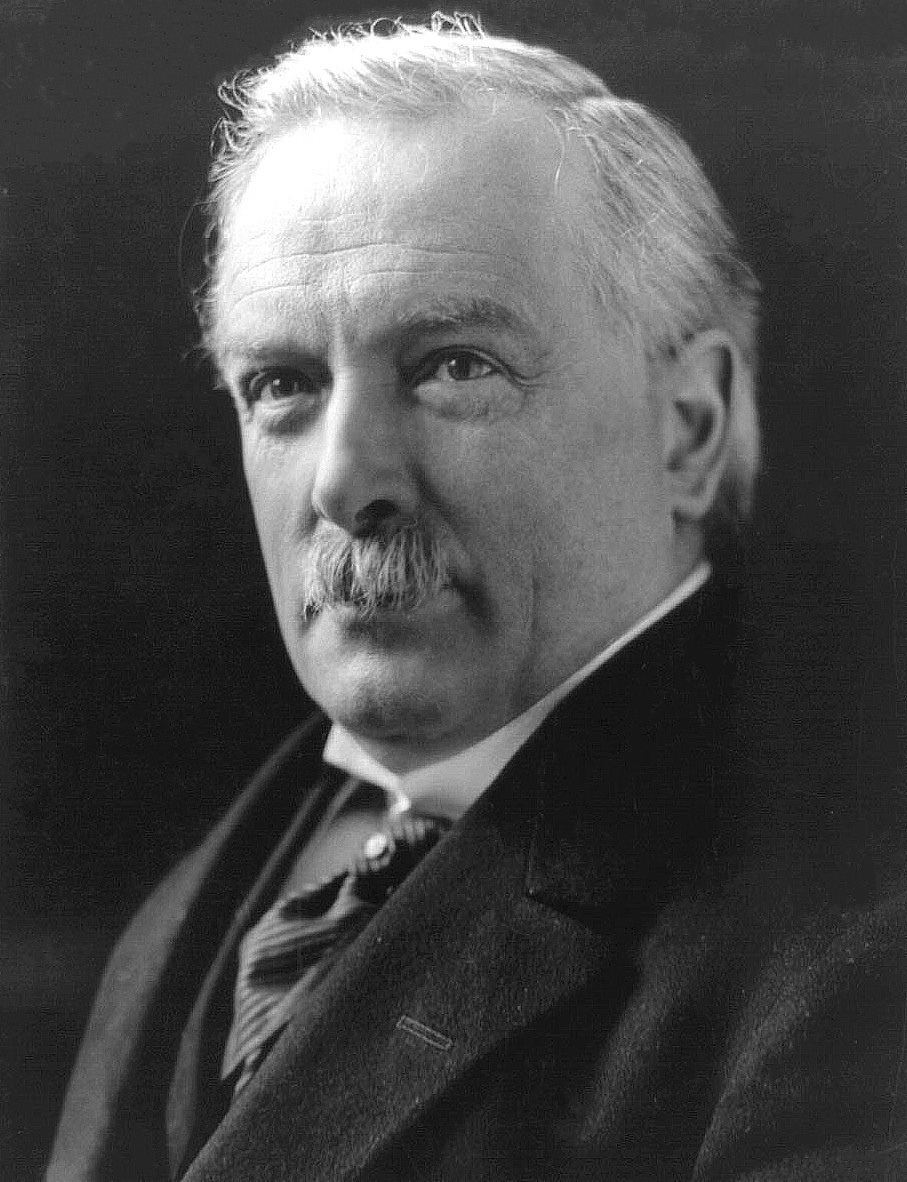
David Lloyd George. He spoke at Caernarfon on 9 October. The report is dated the 10th.
The papers of 10 October 1920 carried Lloyd George’s speech at Caernarfon. He had spoken the day before. He defended the police, said they had not burned houses without provocation, and gave the figures he was using: 109 policemen shot dead in the past year, and about 100 soldiers. Critics called it a hellish policy and heard it as cover for reprisals. He also said the government would go on with the bill that, in December, became the Government of Ireland Act and the basis of Northern Ireland. A year later he was across the table from Griffith and Collins.
The same day, an unsigned memorandum in the Gavan Duffy papers asked what France would do for Ireland. It said French opinion had grown more sympathetic since the end of the war, but that many in France still thought Dominion Home Rule was enough, and that the French government would not quarrel with Britain. The author thought Ireland’s standing had improved, and that much remained to be done. No power recognised the Republic.
1922. The bishops, and the proclamation
On 10 October 1922 the Catholic bishops, meeting at Maynooth, condemned the anti-Treaty campaign. They said no one was justified in rebelling against the government, and that no oath could bind a man to a war forbidden by the law of God. They told republicans to take the amnesty. Those who went on were to be refused absolution and Holy Communion. Priests who supported them were warned of suspension. De Valera protested to the Vatican. The war did not stop. Some bishops later objected in private to the executions. The hierarchy never denounced that policy as a body. On this same day a proclamation signed by W. T. Cosgrave and Richard Mulcahy stated that the Army Council’s emergency powers would operate from 15 October.
References:
Murray, P. (2000) Oracles of God: The Roman Catholic Church and Irish Politics, 1922–37. Dublin: University College Dublin Press.
Ó Corráin, D. (2022) ‘10 October 1922: The Bishops Condemn the Republican Campaign’, Century Ireland. Available at: https://www.rte.ie/centuryireland/articles/10-october-1922-the-bishops-condemn-the-republican-campaign (Accessed: 27 September 2026).
RTÉ (2018) ‘The Sinking of RMS Leinster and SS Dundalk’. Available at: https://www.rte.ie/news/2018/1010/1001997-remembering-rms-leinster/ (Accessed: 27 September 2026).
RTÉ/Century Ireland (2018) ‘RMS Leinster sunk off Irish coast’. Available at: https://www.rte.ie/centuryireland/articles/rms-leinster-sunk-off-irish-coast (Accessed: 27 September 2026).
RTÉ/Century Ireland (2020) ‘Lloyd George criticised over “hellish policy” for Ireland’, Century Ireland, 10 October. Available at: https://www.rte.ie/archives/2020/1007/1170029-edition-189-century-ireland/ (Accessed: 27 September 2026).
RTÉ History (2022) ‘The Catholic Church and the Irish Civil War’. Available at: https://www.rte.ie/history/michael-collins/2022/0803/1313790-the-catholic-church-and-the-irish-civil-war/ (Accessed: 27 September 2026).


Leave a comment