ON THIS DAY
11 October
1921. The talks begin
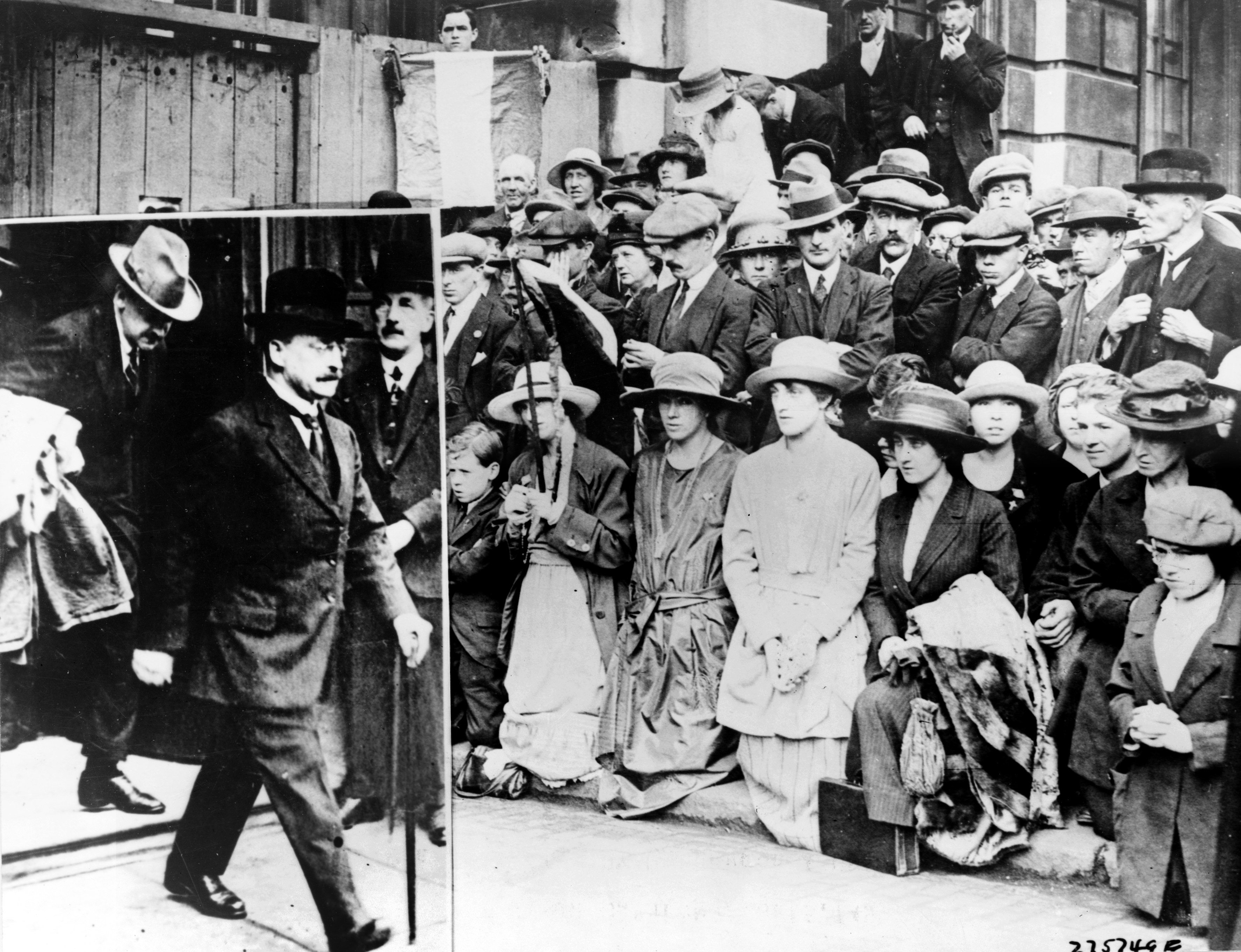
Arthur Griffith, in the small portrait, and Irish republicans in London for the talks. This photograph was published on 22 October. It is not the meeting itself.
On 11 October 1921 the Anglo-Irish talks opened in London. Arthur Griffith, Michael Collins, Robert Barton, Éamonn Duggan and George Gavan Duffy sat down with David Lloyd George, Winston Churchill, Austen Chamberlain and Lord Birkenhead. Collins had been one of the most wanted men in the empire. He was now in the room. Griffith wrote to Éamon de Valera that day, after the first meeting. The two sides did not even agree on what they were negotiating. The Dáil claimed a republic. Britain would not recognise one. Northern Ireland already had a parliament. The Crown, the ports and the oath were all still open.
The Cabinet had told them on 7 October to keep Dublin informed, and to send the full text of any treaty before it was signed. They were also called plenipotentiaries. That contradiction was already in the room. The talks ran until the early hours of 6 December. Nothing signed that morning was inevitable on this one.
1920. Fernside
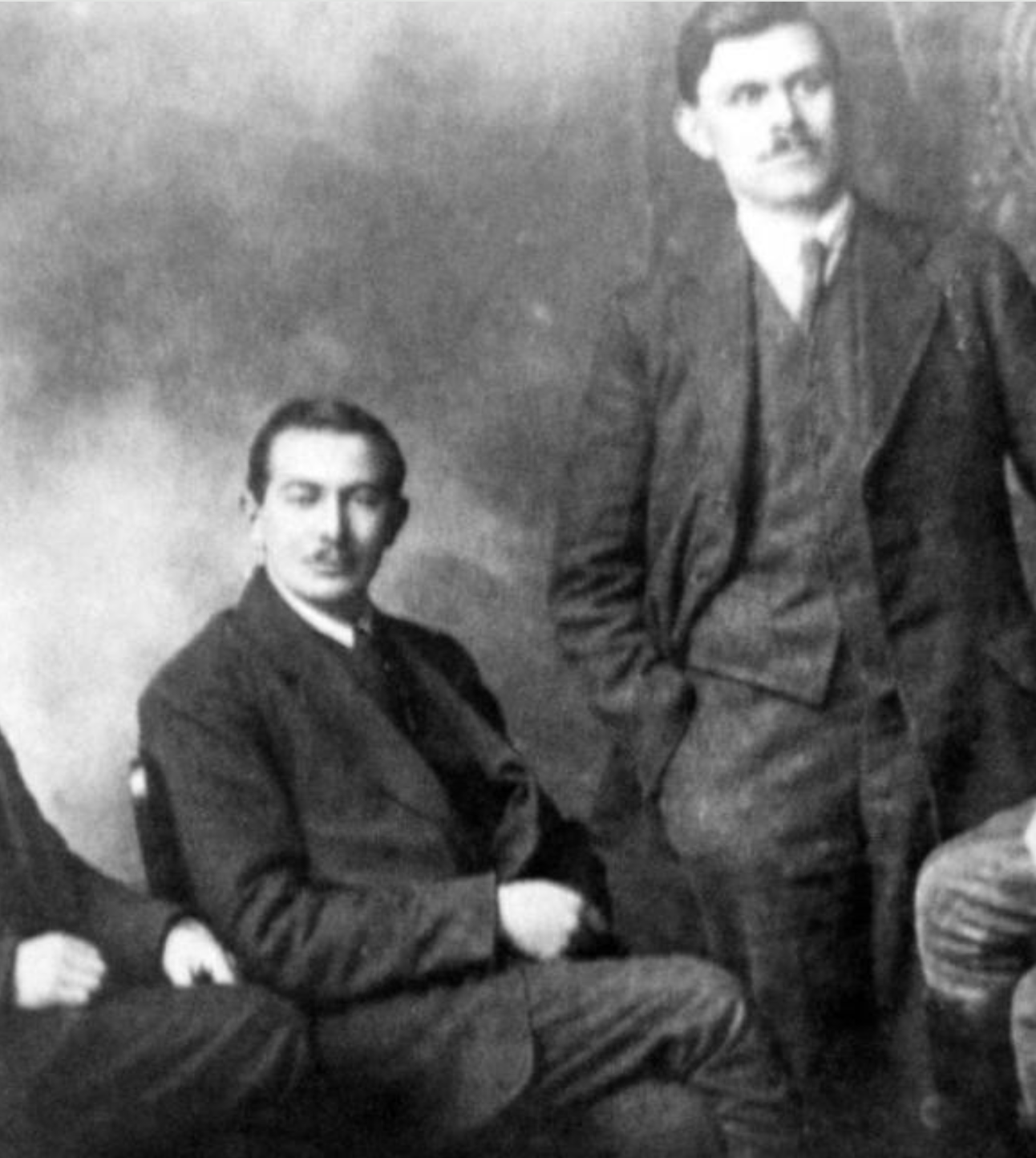
Seán Treacy, seated left, and Dan Breen, standing right. Part of a group photograph, not the raid at Fernside.
A year earlier, on the night of 11–12 October 1920, Crown forces raided Fernside, the house of Professor John Carolan on Upper Drumcondra Road. Dan Breen and Seán Treacy were inside. Major George Smyth and Captain Alfred White were killed. Breen was badly wounded and got away. Treacy got away too. Carolan was shot in the neck and died on 28 October. One British account said he was caught in the crossfire. Later accounts said he was shot while being questioned. The fatal shot is not settled. What is settled is that two officers were killed, Carolan died of his wound, and Breen escaped. Treacy was recognised in Talbot Street on 14 October and killed there.
In twelve months the same struggle had moved from the stairs at Fernside to a conference room in London.
References:
Breen, D. (1989) My Fight for Irish Freedom. Dublin: Anvil Books.
Hopkinson, M. (2002) The Irish War of Independence. Dublin: Gill & Macmillan.
National Archives of Ireland (2021) The Treaty, 1921: Records from the Archives. Dublin: National Archives of Ireland. Available at: https://www.nationalarchives.ie/wp-content/uploads/2022/02/21.12.03-Treaty-Exhibition-Catalogue-Web.pdf (Accessed: 27 September 2026). National Archives
National Archives of Ireland (n.d.) ‘Dáil Éireann Collections’. Available at: https://nationalarchives.ie/collections/dail-eireann-collections/ (Accessed: 27 September 2026). National Archives
Pakenham, F. (1935) Peace by Ordeal: An Account, from First-Hand Sources, of the Negotiation and Signature of the Anglo-Irish Treaty 1921. London: Jonathan Cape.
Townshend, C. (1975) The British Campaign in Ireland, 1919–1921. Oxford: Oxford University Press.


Leave a comment