ON THIS DAY
31 October
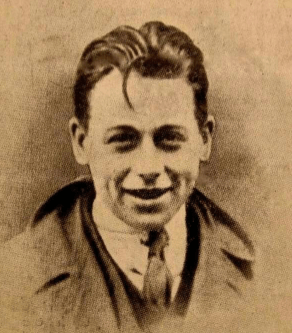
1920. Kevin Barry’s last full day

Kevin Barry. Hanging fixed for 8 a.m., 1 November. This page stops at midnight.
Sunday 31 October. He was eighteen. The rope was for the morning. UCD holds a photograph from this day: armoured car, soldier, crowd at the Mountjoy gate. The people in it did not yet have a ballad. They had a living prisoner.
Court martial 20 October. Monk’s Bakery, 20 September. Three soldiers of the Duke of Wellington’s Regiment died from that raid, among them Private Harold Washington, fifteen, and Private Marshall Whitehead. Barry was taken under the lorry. He refused the court. He told his family not to appeal the conviction. Others still asked for a reprieve. Macready held that a commutation after dead soldiers would break army nerve.
Fr Francis Browne, Jesuit, Old Belvedere master, later the Titanic photographer, cycled to the Viceregal Lodge and asked for the life. It failed. Fr Albert Bibby, Capuchin, led UCD students in the Rosary outside the wall, then went in to the cell. Celia Shaw’s diary puts the students there that Sunday.
His mother Mary, sisters and brother came. Papers already had him saying he was “off on Monday morning.” That night he wrote to Kathleen Carney: greetings, jokes, a request for prayer. The letter is dated 31 October. At midnight he was still alive.
1920. Kerry: several attacks, not one battle
The same Sunday and the night around it, IRA units hit police at Abbeydorney, Ballyduff, Killorglin, Dingle and Tralee. David Leeson counted six attacks in a day: five police killed, eleven wounded, two taken. It was not one engagement. Sources do not agree on every name and hour. That should stay on the page.
Patrick O’Connor (BMH WS 1190) says more than fifty men assembled near Beenreigh from about 10 a.m. for Tralee lorries. The lorries did not come. About 5 p.m. the main ambush was stood down. Parties then went for Crown forces around Abbeydorney and Causeway.
UCC dates the Ballyduff barracks and street attack to 31 October: Constable George Morgan killed; Constables Robert Gorbey, 23, six months in the RIC, and William Madden, 30, eleven years’ service, wounded and later dead in Cork military hospital. Other reconstructions move some of those hours into 1 November. Write it as: attacks in the Abbeydorney–Ballyduff district left men dead or dying; the registers disagree on the clock.
At Hillville, near Killorglin, Constables Albert Caseley and John Herbert Evans were found shot. Constables Patrick Waters and Ernest Bright were taken. The Police Roll of Honour dates both disappearances to 31 October. Neither body has been found. Later talk of a gasworks furnace is rumour. After Ballyduff the creamery was burned, houses were burned, and labourer John Houlihan was taken from his bed, shot and bayoneted; his brother was on hunger strike in Mountjoy. Tralee’s missing men became the pretext for the blockade of 1–9 November.
1920. MacSwiney is buried in Cork

MacSwiney’s coffin. City Hall to the North Cathedral to St Finbarr’s, 31 October.
The coffin left City Hall under the tricolour. Strickland had banned formed processions. The ban was ignored. Brothers Peter and Seán walked. Dáil and Corporation walked. A Company, 2nd Battalion, Cork No. 1 Brigade walked. Noon Mass at the North Cathedral: Bishop Daniel Cohalan; Archbishop John Harty of Cashel present. The route passed Cork Gaol. Burial beside Tomás Mac Curtain, near Joseph Murphy. Arthur Griffith spoke. Last Post. Revolver volleys. Armoured cars stood off and did not fire.
Cork buried MacSwiney on Sunday. Dublin still had Barry until Monday morning.
References
Dorney, J. (2012) ‘The Siege of Tralee, November 1–9, 1920’, The Irish Story. theirishstory.com/2012/11/06/the-siege-of-tralee-november-1-9-1920
Cork Independent (4 Nov. 2020), ‘Remembering 1920: Terence MacSwiney’s funeral’. City Hall to North Cathedral to St Finbarr’s, 31 October. corkindependent.com/2020/11/04/remembering-1920-terence-macswineys-funeral


Leave a comment