ON THIS DAY
1 November
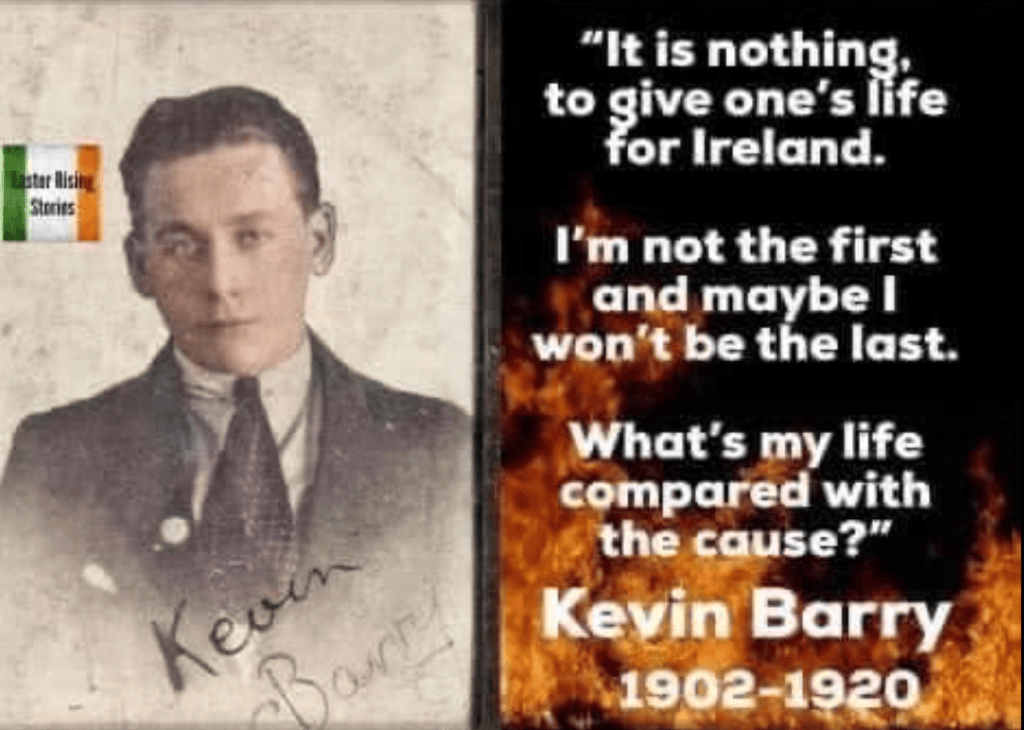
1920. Kevin Barry is executed
At 8 o’clock on the morning of 1 November 1920, eighteen-year-old Kevin Barry was hanged inside Mountjoy Prison in Dublin.
A medical student at University College Dublin and a Volunteer in the Dublin Brigade of the IRA, Barry had been sentenced to death for his part in an attempt to seize weapons from British soldiers outside Monk’s Bakery in Church Street six weeks earlier.
Three young British soldiers died as a result of that operation.
Barry’s execution transformed him into one of the best-known republican figures of the War of Independence. But behind the later ballads and commemorations lies a more complicated story: an armed IRA operation, three dead soldiers, a disputed interrogation, a military court and a failed campaign for clemency.
From student to Volunteer
Kevin Gerard Barry was born in Dublin on 20 January 1902 and educated at Belvedere College before entering University College Dublin in 1919 to study medicine.
He had already joined the Irish Volunteers in 1917, while still only fifteen. His IRA duties included training, carrying orders and taking part in operations to seize weapons. In June 1920 he participated in the successful IRA raid on the King’s Inns, where rifles, machine guns and ammunition were captured from a British military post.
Later accounts also record that Barry had been sworn into the Irish Republican Brotherhood through the Clarke Luby circle.
Monk’s Bakery
On 20 September 1920, Barry joined an IRA party attempting to seize weapons from British soldiers collecting bread at Monk’s Bakery in Church Street.
The operation went wrong.
Shots were fired and three soldiers were killed or fatally wounded:
- Private Harold Washington
- Private Marshall Whitehead
- Private Thomas Humphries
Barry’s pistol jammed during the fighting and he was captured after the other Volunteers withdrew.
His later fame should not cause those three soldiers to disappear from the story. As historian M. A. Doherty has noted, the episode ultimately involved the deaths of four very young men — Washington, Whitehead, Humphries and Barry himself.
Alleged ill-treatment
After his capture, Barry was taken to the North Dublin Union, where British soldiers questioned him about other Volunteers.
Barry later alleged that he had been physically mistreated during the interrogation. In a statutory declaration made on 28 October, he claimed that soldiers had twisted his arm, forced him to the floor and threatened him with a bayonet while demanding names and addresses.
The declaration is important because it was made before his execution. It establishes what Barry himself alleged, although individual details should not automatically be treated as independently proven fact.
Court-martial and sentence
Barry was tried by general court-martial on 20 October 1920 under the Restoration of Order in Ireland Act.
The surviving UCD documents include charges relating to the deaths of Whitehead, Washington and Humphries. The prosecution focused particularly on Private Marshall Whitehead, and Barry was found guilty of Whitehead’s murder.
Barry did not conduct a conventional defence. He refused to recognise the authority of the military court, and his legal adviser withdrew from active participation.
He was sentenced to death by hanging.
The campaign for clemency
Barry’s age became central to the controversy.
He was only eighteen, and appeals for clemency came from religious, political and civic figures.
British military authorities opposed a reprieve. General Sir Nevil Macready believed commuting the sentence would damage military morale after three soldiers had been killed.
Barry himself instructed his family not to appeal formally against his conviction because doing so would have implied recognition of the court’s authority.
The sentence stood.
1 November 1920
Barry spent his final night in Mountjoy Prison.
On the morning of 1 November, All Saints’ Day, he heard Mass and was accompanied in his final hours by the prison chaplain, Canon John Waters.
At 8 a.m., Kevin Barry was hanged.
He was eighteen years old.
His body was buried inside Mountjoy Prison. There was no public funeral.
From prisoner to symbol
Barry’s execution immediately became a major republican propaganda issue.
His youth, his university background and the timing of his death — only a week after Terence MacSwiney died on hunger strike — gave the case enormous emotional power.
But the historical Kevin Barry was more complicated than the later legend.
He was an eighteen-year-old student executed by the British state.
He was also a committed IRA Volunteer who willingly took part in an armed operation in which three young British soldiers died.
Both facts belong in the story.
The ballad and the Forgotten Ten
Barry’s memory was later preserved through the famous ballad “Kevin Barry”, which helped turn him into one of the most recognisable figures of the revolutionary period.
He was also the first of ten men executed by hanging in Mountjoy during the War of Independence who became known collectively as the Forgotten Ten.
Their remains remained in Mountjoy until 2001, when they were exhumed and reinterred following state ceremonies.
1884. The GAA is founded
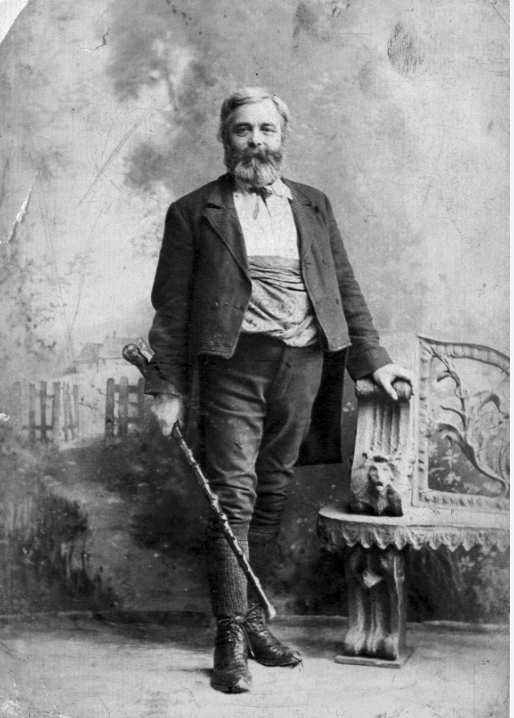
At a meeting in Hayes’ Hotel, Thurles, County Tipperary, teachers and enthusiasts led by Michael Cusack agreed to form “the Gaelic Athletic Association for the Preservation and Cultivation of National Pastimes.” Maurice Davin, a celebrated athlete, was elected its first president. The GAA would become the largest sporting and cultural organisation in Ireland and a powerful vehicle of nationalist community life.
The GAA fused sport with national identity, embedded the nationalist movement in every parish, and its playing fields, notably Croke Park, became stages for political history.
1913. Eoin MacNeill publishes ‘The North Began’
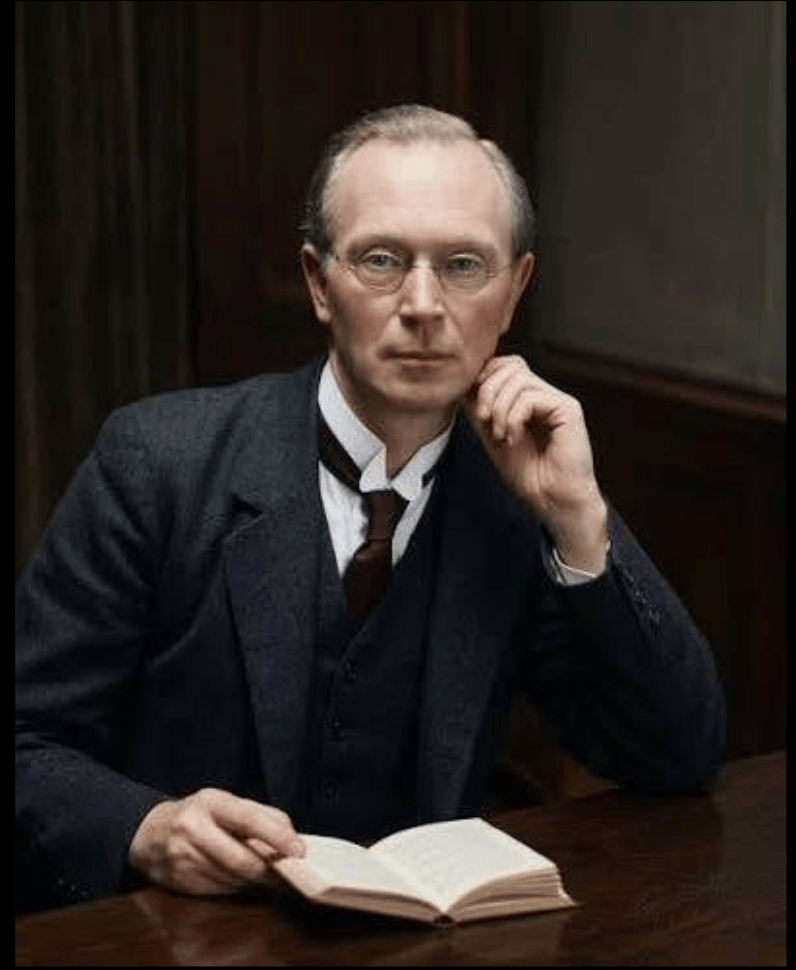
The Gaelic League newspaper An Claidheamh Soluis published ‘The North Began’, an article by UCD professor Eoin MacNeill arguing that nationalists should emulate the Ulster Volunteers and form their own citizen army. The article, encouraged by The O’Rahilly, became the public catalyst for the founding of the Irish Volunteers later that month.
A single newspaper article set in motion the organisation that would fight the Easter Rising and become the IRA.
1920. Eileen Quinn is shot at Kiltartan
On 1 November 1920 Eileen Quinn, pregnant and the mother of three young children, was shot as she sat outside her home at Kiltartan, near Gort, County Galway, with her baby. Auxiliaries fired from a passing lorry. She died that night.
A British military court of inquiry returned a verdict of death by misadventure and described the firing as “a precautionary measure.” The killing was widely reported. Father John Considine, the local curate, said she had been killed by a shot from men who must have seen her.
References
Doherty, M.A. (2000) ‘Kevin Barry and the Anglo-Irish propaganda war’, Irish Historical Studies, 32(126), pp. 217–231. Cambridge Core (Accessed: 1 November 2026).
Hawkins, R. (2009) ‘Barry, Kevin Gerard’, Dictionary of Irish Biography. Royal Irish Academy. Dictionary of Irish Biography (Accessed: 1 November 2026).
RTÉ (2020) ‘Kevin Barry: What really happened’, RTÉ News, 1 November. RTÉ (Accessed: 1 November 2026).
RTÉ Archives (2001) ‘The Forgotten Ten’. RTÉ Archives (Accessed: 1 November 2026).
The Irish War (n.d.) ‘Kevin Barry’. The Irish War (Accessed: 1 November 2026).
UCD Archives (2007) Papers of Kathleen Barry Moloney, P94: Descriptive Catalogue. Dublin: University College Dublin. UCD Archives (Accessed: 1 November 2026).
University College Dublin Library and UCD Archives (n.d.) ‘Kevin Barry and His Time’. UCD digital exhibition (Accessed: 1 November 2026). The statutory declaration is also on Google Arts & Culture.
Gaelic Athletic Association, founded 1 November 1884. Wikipedia; Ó hAonghusa, P. M. (2009) ‘Cusack, Michael’, Dictionary of Irish Biography. Dictionary of Irish Biography; GAA, ‘Remembering Michael Cusack’. gaa.ie (Accessed: 1 November 2026).
MacNeill, E. (1913) ‘The North Began’, An Claidheamh Soluis, 1 November. UCD Decade of Centenaries; Irish Volunteers (Accessed: 1 November 2026).
Killing of Eileen Quinn, Kiltartan, 1 November 1920. November 1920 chronology; Wikipedia (Accessed: 1 November 2026).


Leave a Reply