1919 — Long Committee recommends two Irish parliaments
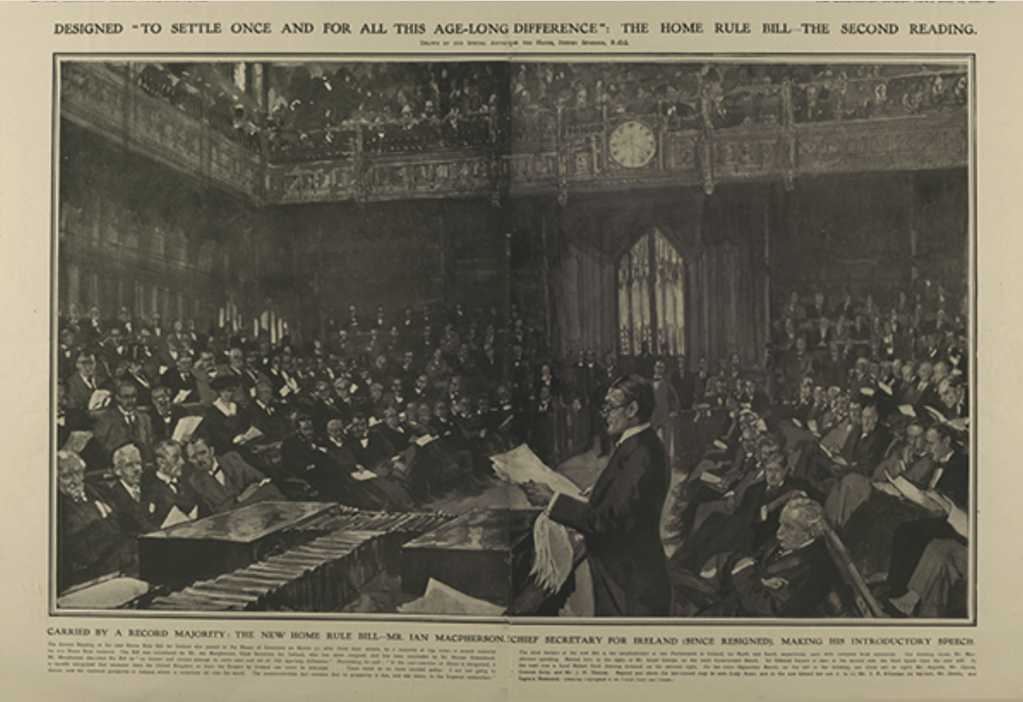
Walter Long’s Government of Ireland Act proposed two Home Rule parliaments
Walter Long’s British Cabinet committee on Ireland presented its first report proposing two Home Rule parliaments, in Dublin and Belfast, with a Council of Ireland. The committee argued that only full domestic self-government could convince Irish, Dominion and American opinion of British sincerity. The direct result of the Government of Ireland Act 1920 would become the partition settlement that still shapes the island.
1920 — Nenagh killings and the bayoneting of the O’Brien brothers
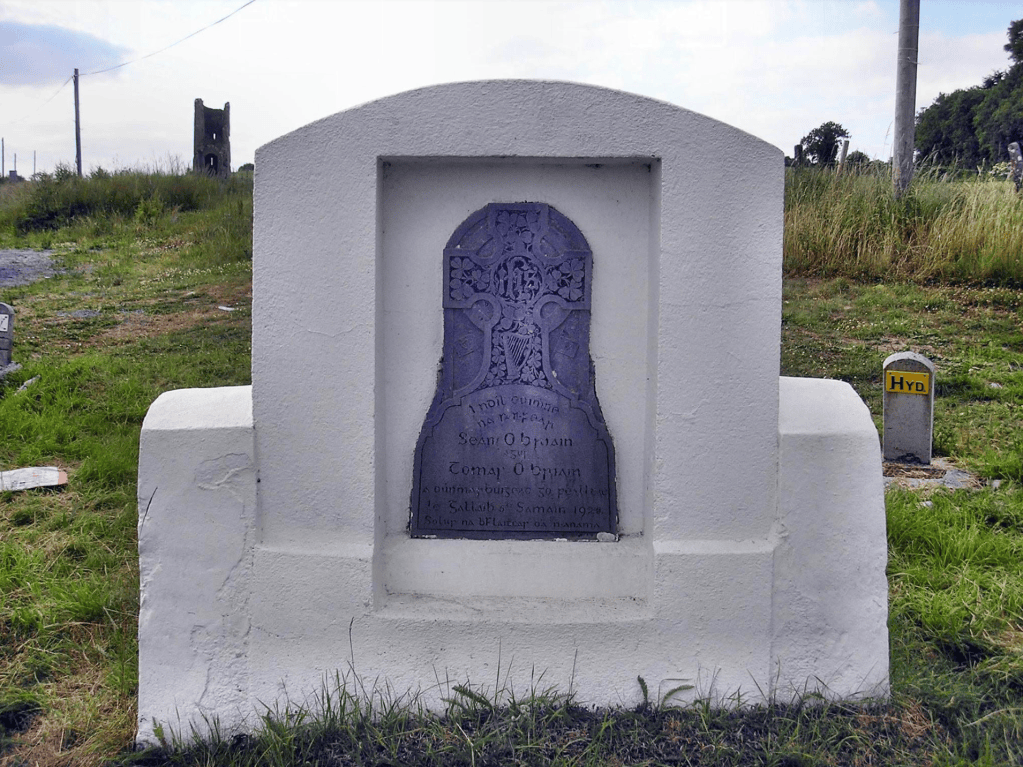
O’Brien brothers monument in Nenagh
IRA volunteers shot dead British Army intelligence officer Captain Henry Hambleton in Nenagh, Co. Tipperary; Crown forces retaliated by burning homes and the town creamery. Two young men in British custody, John and Thomas O’Brien, were bayoneted to death — accounts conflict over whether they were even IRA members. The killings were cited in Dáil publicity as evidence of British savagery, hardening opinion before the climax of the war.
1921 — Gavan Duffy complains to de Valera about the plenipotentiaries
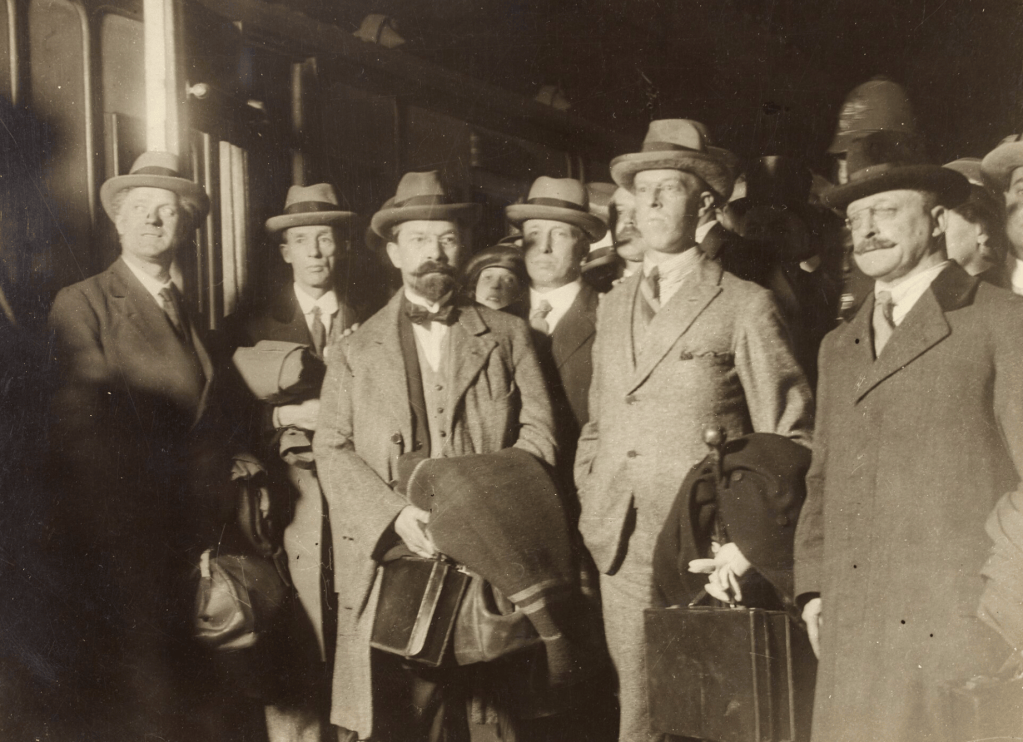
George Gavan Duffy in centre of picture, bearded. With Erskine Childers, Robert Barton and Arthur Griffith
George Gavan Duffy travelled secretly to Dublin, at Barton’s and Childers’ request, to tell de Valera that Griffith and Collins were negotiating alone with the British beyond their instructions. De Valera declined to intervene — a decision that stored up the December crisis over the delegation’s freedom. This would show the divisive nature of the Sinn Féin leadership at the decisive moment of the Treaty negotiations.
1922 — Rockmarshall ambush, Co. Louth
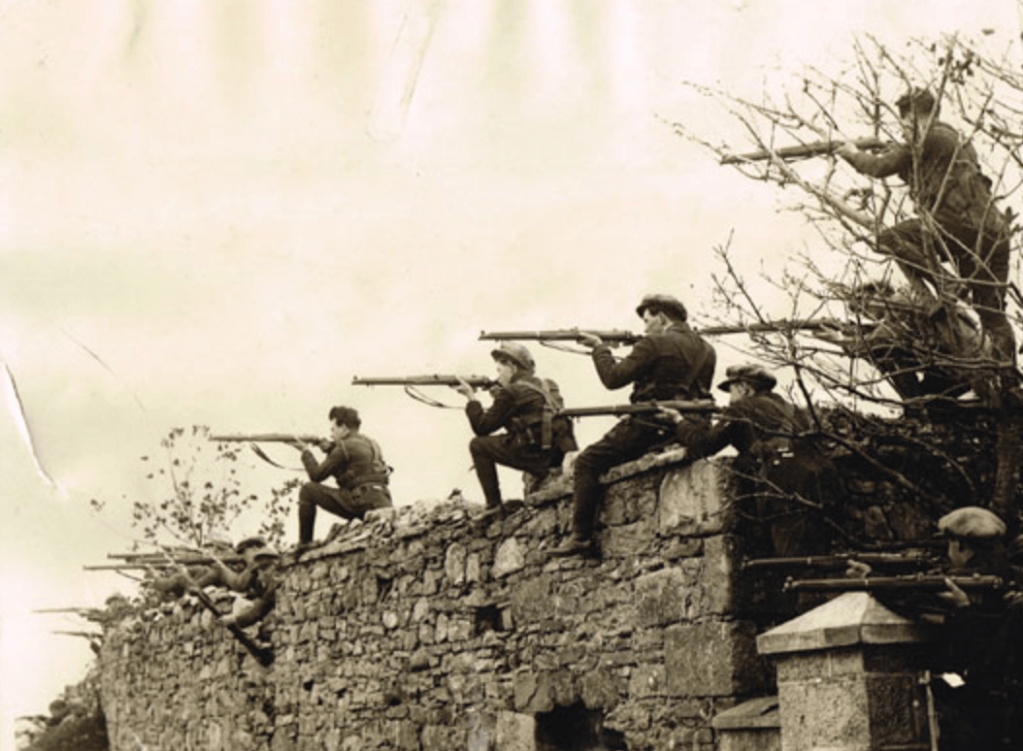
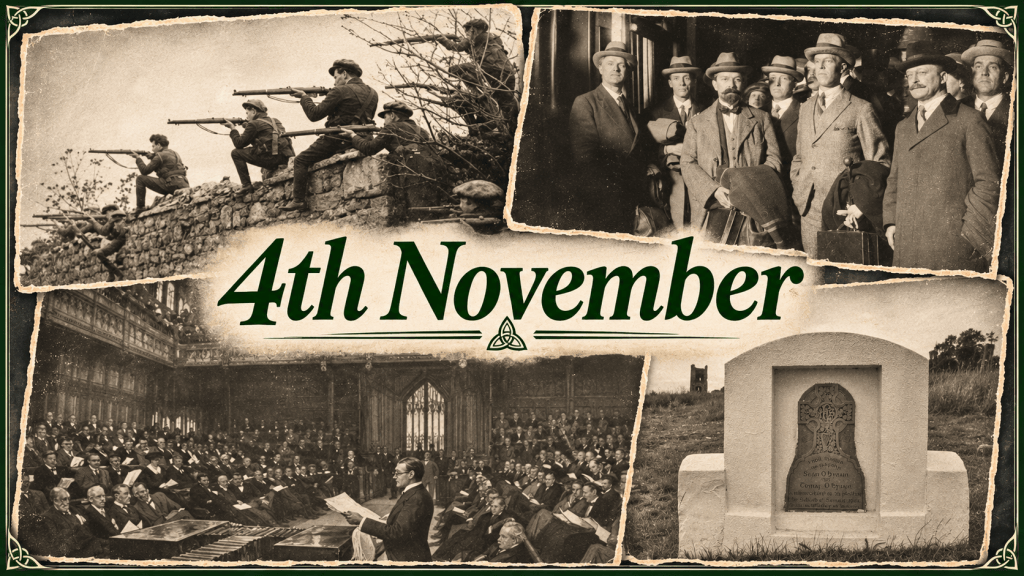
Staged photo of Pro-Treaty troops in firing positions
Anti-Treaty fighters ambushed a pro-Treaty patrol at Rockmarshall near Dundalk, killing Captain James Boyle and Sergeant Treanor. In Kerry the same day, Private Thomas Gallagher was killed attending a wounded man at Ballineen and Private Peter Conroy was shot at Blennerville drawbridge. November 1922 displayed relentless small-scale attrition on the roads of Leinster and Munster.
References:
1. Irish History 1919–1923 Chronology (n.d.) ‘November 1919’ [Entry for 4 November 1919]. Available at: http://irishhistory1919-1923chronology.ie/november_1919.htm (Accessed: 1 November 2026).
2. Irish History 1919–1923 Chronology (n.d.) ‘November 1920’ [Entry for 4 November 1920]. Available at: http://irishhistory1919-1923chronology.ie/november_1920.htm (Accessed: 1 November 2026).
3. Irish History 1919–1923 Chronology (n.d.) ‘November 1921’ [Entry for 4 November 1921]. Available at: http://irishhistory1919-1923chronology.ie/november_1921.htm (Accessed: 1 November 2026).
4. Irish History 1919–1923 Chronology (n.d.) ‘November 1922’ [Entry for 4 November 1922]. Available at: http://irishhistory1919-1923chronology.ie/november_1922.htm (Accessed: 1 November 2026).
5. Wikipedia contributors (n.d.) ‘Government of Ireland Act 1920’. Wikipedia. Available at: https://en.wikipedia.org/wiki/Government_of_Ireland_Act_1920 (Accessed: 1 November 2026).


Leave a Reply