7 November 1798 – News of Wolfe Tone’s Capture Reaches the Public
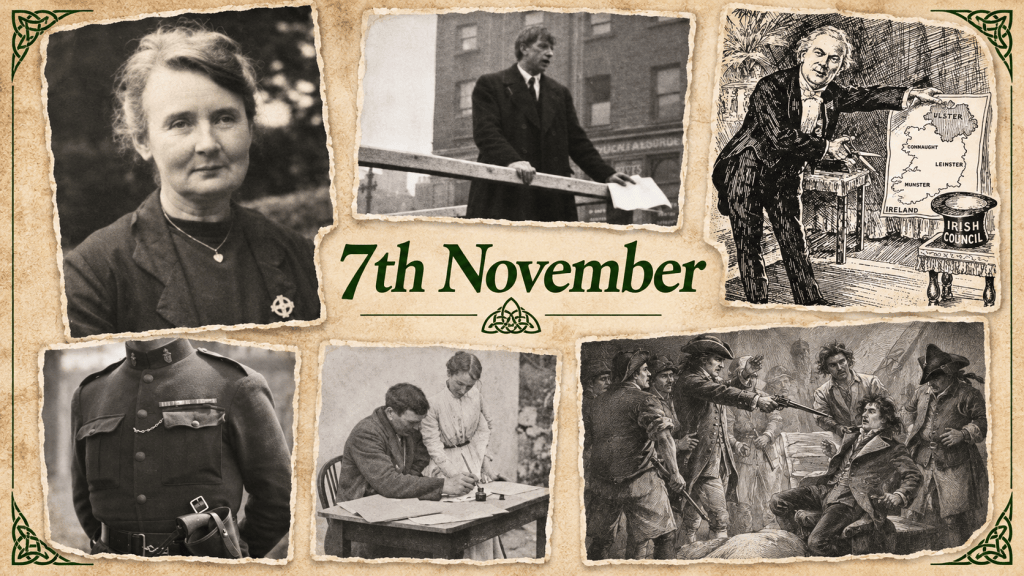
The arrest of Wolfe Tone.
Reports concerning the capture and identification of Theobald Wolfe Tone were circulating in Ireland. Tone had been serving as an adjutant-general in the French army and had accompanied General Hardy’s expedition to Ireland aboard the French flagship Hoche.
The French fleet was intercepted by the Royal Navy off the Donegal coast on 12 October 1798. Following the surrender of the Hoche, Tone remained a prisoner aboard the captured vessels until the French officers were brought ashore at Buncrana in early November.
Tone was recognised by Sir George Hill, a former acquaintance from Trinity College Dublin, and taken into custody. Contemporary reports had already suggested that Tone might be among the Irish prisoners captured with the French fleet.
An account examined by historian Ruan O’Donnell in The Irish Times records that a source in Derry had identified Tone among the captured French officers by 3 November. Reports had also speculated that “Tone, Lewins and Turner” were among the Irish prisoners taken aboard the French vessels.
Tone was subsequently conveyed to Dublin and held in the Provost Prison at the Royal Barracks. On 10 November 1798, he appeared before a military court on a charge of treason. He was sentenced to death by hanging but died in captivity on 19 November 1798.
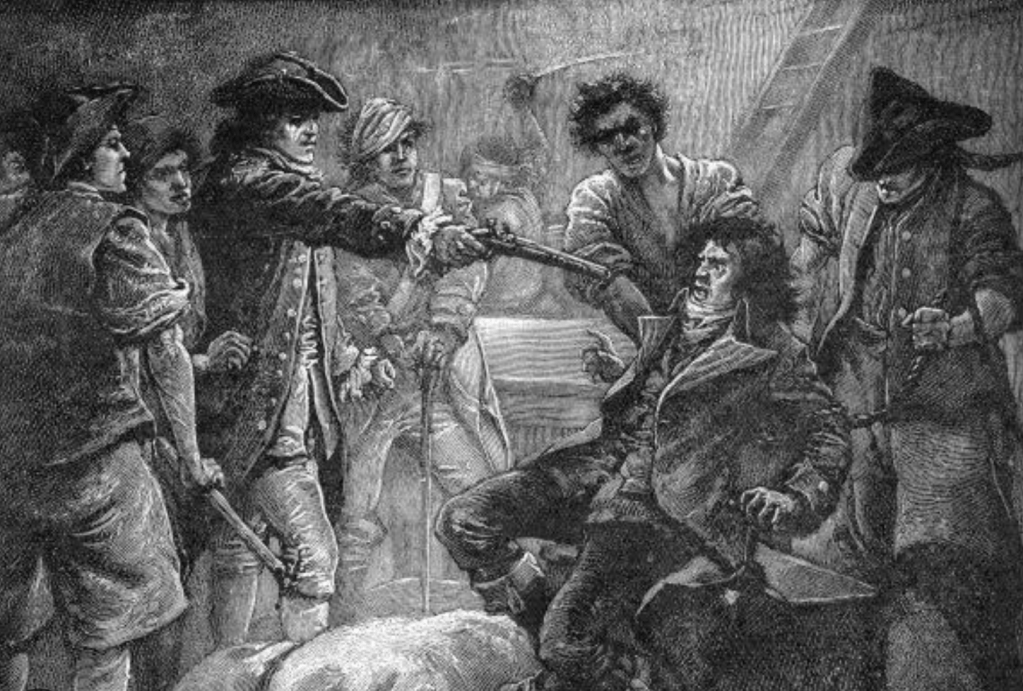
1919 — Dáil Cabinet approves a national court system
A Dáil Court in Skerries
The Dáil Cabinet approved establishing a national system of courts, subject to working out costs (a full system was later costed at £112,000). Progress was slow because Griffith held Home Affairs while de Valera was in America and the entire apparatus worked underground. The beginning of the Dáil courts — the most successful exercise in state-building before independence, was administering justice the RIC could no longer supply.
1920 — Kidnapping of Constable Thomas Walsh, Blarney
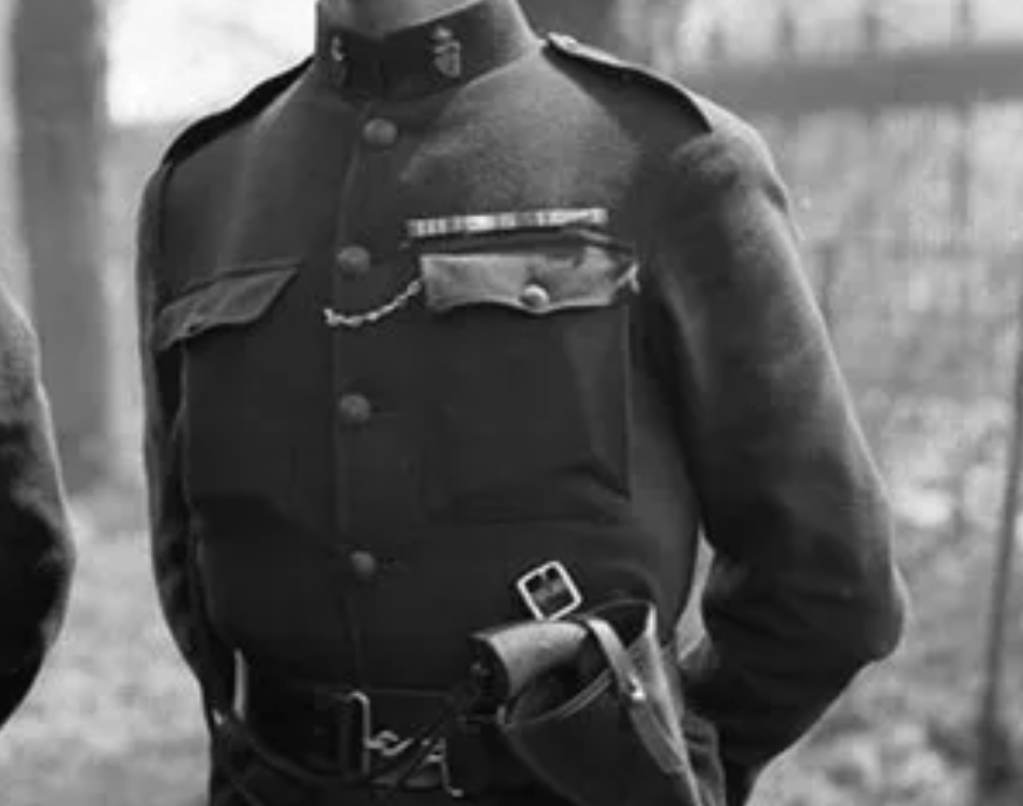
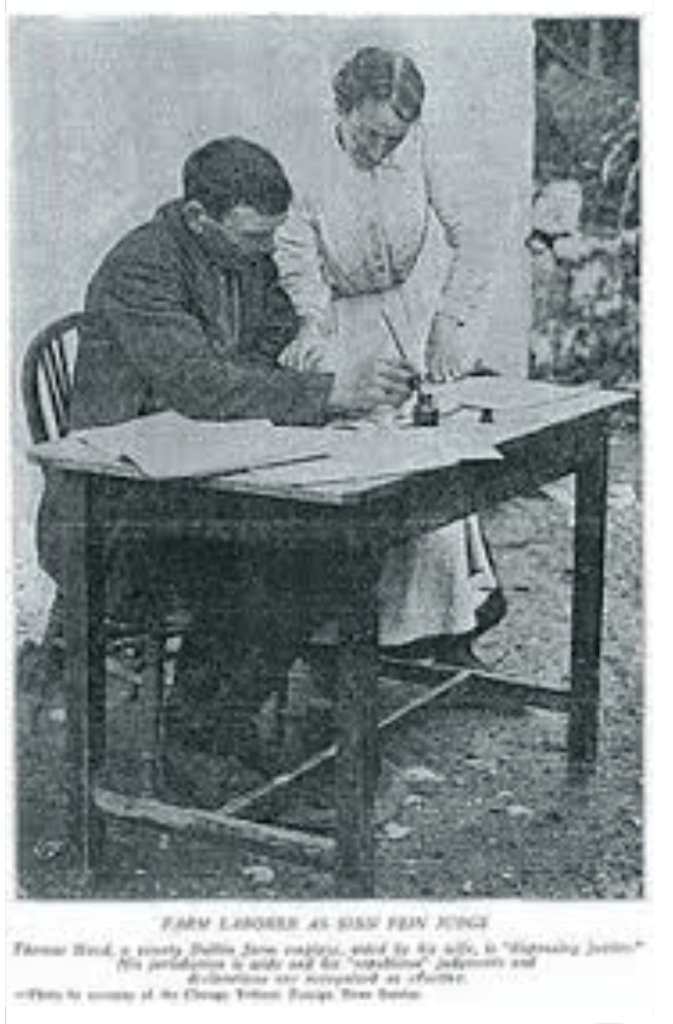
RIC Constable uniform and revolver
RIC constable Thomas Walsh was kidnapped from a train at Blarney, Co. Cork. He escaped, was recaptured and was executed by the IRA; his body was never found, and his RIC record formally records dismissal on the day of his disappearance.
The fate of policemen who continued serving — caught between Crown and community — was a difficult decision for many.
1921 — Lloyd George floats the boundary alternative
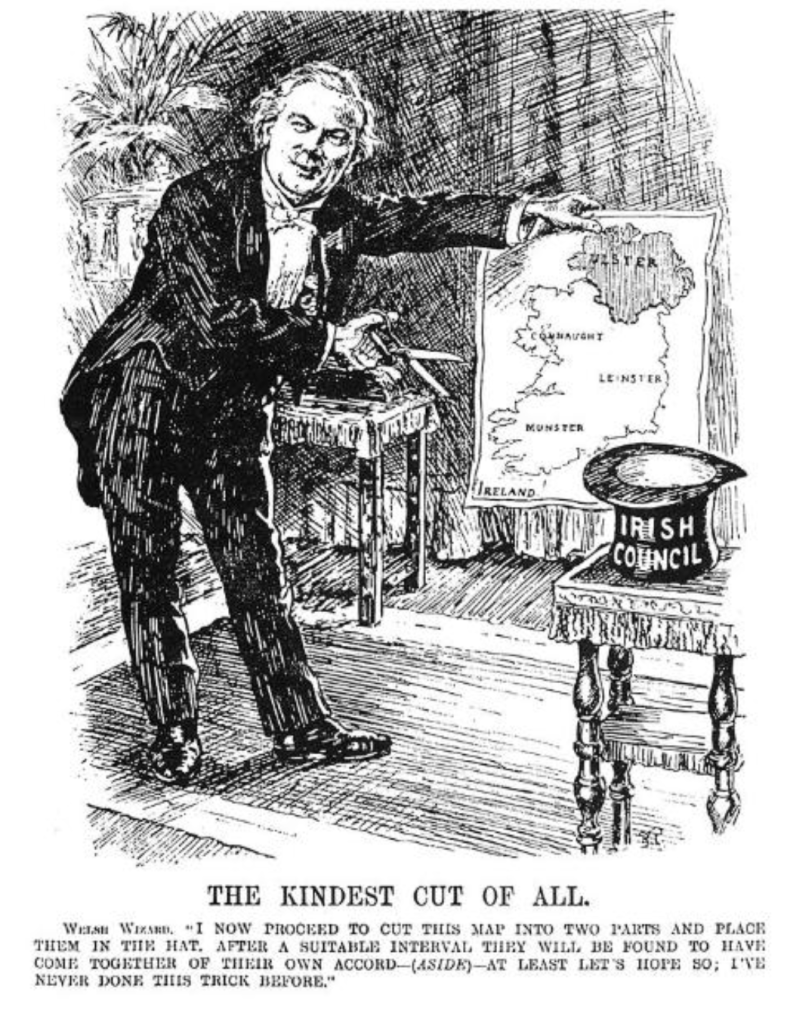
Cartoon from Punch Magazine of British Prime Minister David Lloyd George’s plan to partition Ireland. What is interesting is that this cartoon was created the year before in 1920 as the Government of Ireland act was already taking shape.
Facing Craig’s rejection of an all-Ireland parliament, Lloyd George confided to his secretary Tom Jones the alternative he was preparing: Dominion status for the twenty-six counties, the six-county arrangement preserved but with boundaries revisable by commission. Jones was asked to sound out Collins and Griffith.
The boundary commission — the Treaty’s most contested device — was conceived here as a way around Ulster.
1922 — De Valera rejects the amnesty offer
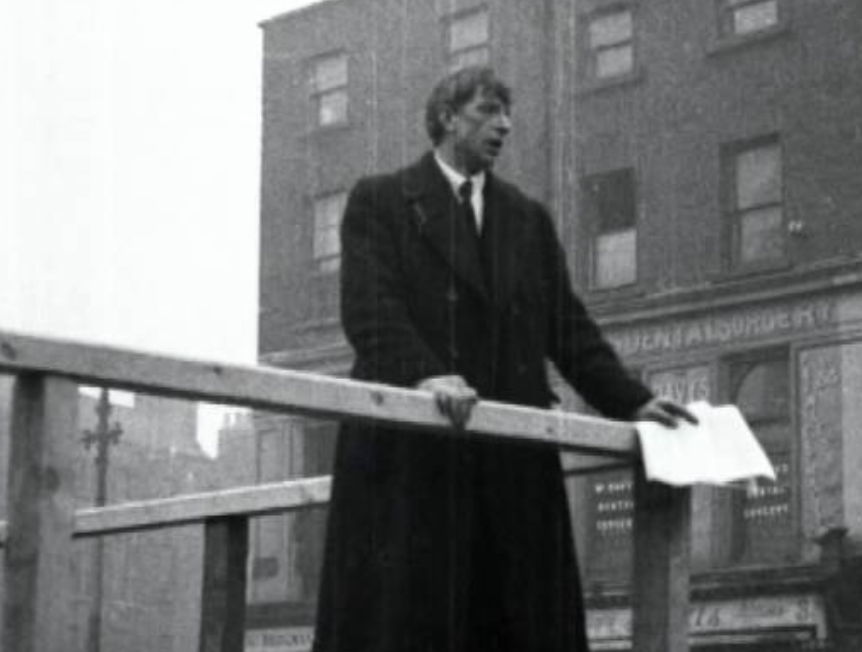
De Valera giving a speech in 1922
A notice signed by de Valera was published declaring that the anti-Treaty side would not accept the Free State’s amnesty offer: the principles at stake admitted no compromise, and the alternatives were “victory or utter defeat and extermination”. The same day, anti-Treaty volunteer Michael Neville was killed at Keel, Achill.
1968 — Death of Margaret Pearse
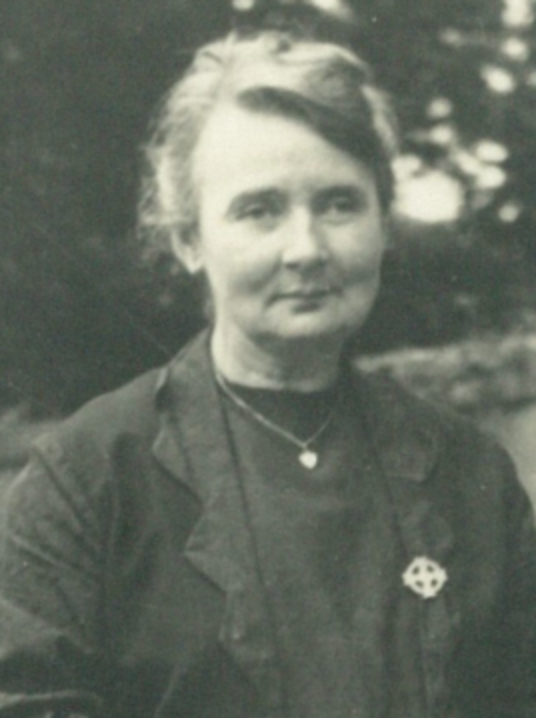
Margaret Mary Pearse, sister of Patrick and Willie Pearse died on this date
Margaret Pearse — sister of Patrick and Willie, keeper of St Enda’s school and its legacy — died on 7 November 1968 after a life in education and politics as a TD and Senator. She was buried in the grave at Glasnevin after a state funeral on 10 November. For fifty years she guarded and shaped the memory of 1916 as a public figure in her own right.
References
1. Bartlett, T. (n.d.) ‘Tone, Theobald Wolfe’, Dictionary of Irish Biography. Royal Irish Academy. Available at: https://www.dib.ie/biography/tone-theobald-wolfe-a8590 (Accessed: 2 November 2026).
2. Irish Capuchin Archives (n.d.) ‘Papers of Margaret Mary Pearse’, Catholic Archives Catalogue, reference IE CA CP/3/5/2. Available at: https://catholicarchives.ie/index.php/papers-of-margaret-mary-pearse (Accessed: 2 November 2026).
3. Irish History 1919–1923 Chronology (n.d.) ‘November 1919’ [Entry for 7 November 1919]. Available at: http://irishhistory1919-1923chronology.ie/november_1919.htm (Accessed: 2 November 2026).
4. Irish History 1919–1923 Chronology (n.d.) ‘November 1920’ [Entry for 7 November 1920]. Available at: http://irishhistory1919-1923chronology.ie/november_1920.htm (Accessed: 2 November 2026).
5. Irish History 1919–1923 Chronology (n.d.) ‘November 1921’ [Entry for 7 November 1921]. Available at: http://irishhistory1919-1923chronology.ie/november_1921.htm (Accessed: 2 November 2026).
6. Irish History 1919–1923 Chronology (n.d.) ‘November 1922’ [Entry for 7 November 1922]. Available at: http://irishhistory1919-1923chronology.ie/november_1922.htm (Accessed: 2 November 2026).
7. O’Donnell, R. (1998) ‘Tone with captured French officers’, The Irish Times, 7 November. Available at: https://www.irishtimes.com/news/tone-with-captured-french-officers-1.211921 (Accessed: 2 November 2026).
8. Wikipedia contributors (n.d.) ‘Margaret Mary Pearse’, Wikipedia. Available at: https://en.wikipedia.org/wiki/Margaret_Mary_Pearse (Accessed: 2 November 2026).


Leave a Reply