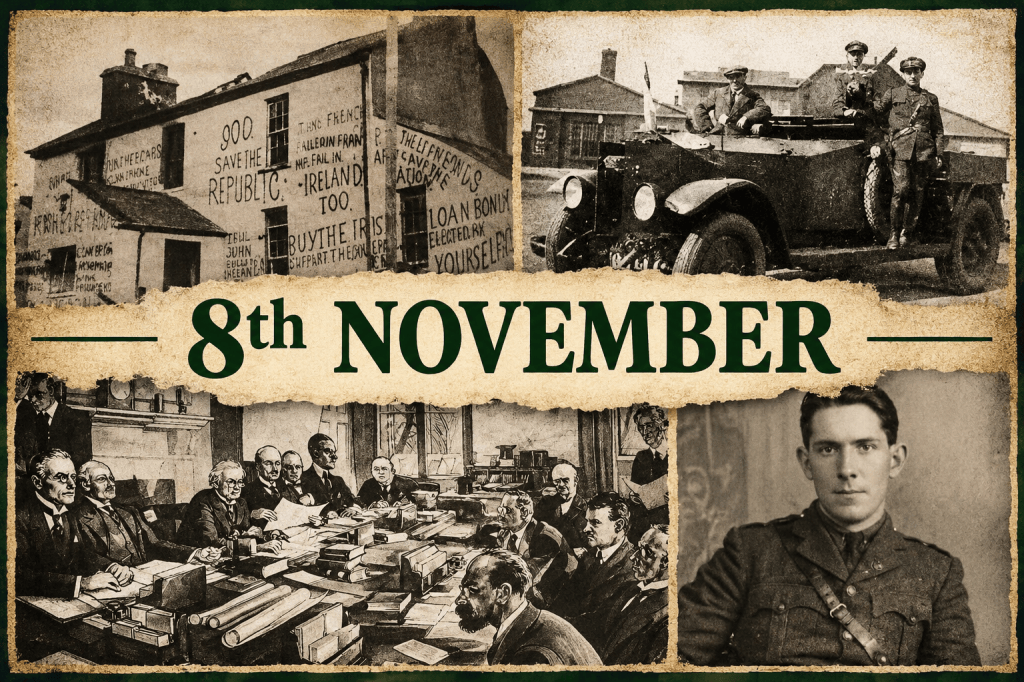
ON THIS DAY — 8 NOVEMBER
1919 — The RIC Begins Closing Vulnerable Barracks
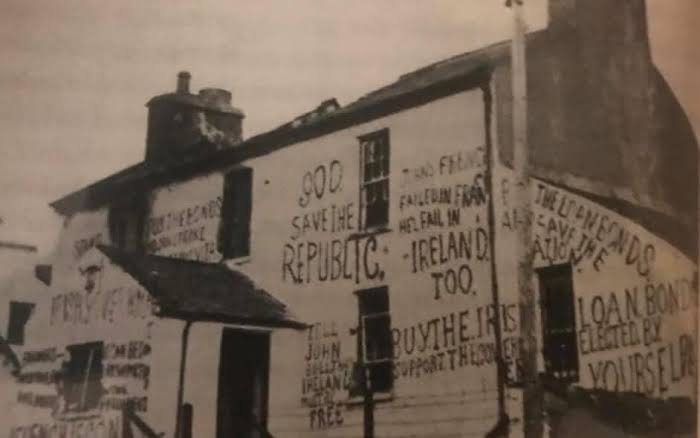
On the 8th November 1919, the Royal Irish Constabulary issued its “Safety of Barracks” circular, directing that small and vulnerable police posts should be closed where necessary so that the remaining barracks could be strengthened to a minimum of six men.
The policy was a defensive response to increasing IRA activity, but it had wider consequences. Concentrating policemen in fewer locations made the surviving barracks easier to defend, while also reducing the everyday reach of the RIC across rural Ireland and giving the IRA greater freedom to organise in some districts.
Here is a documentary I made about the burning of the RIC barracks the following year featuring interviews with participants.
1920 — A Further Attack at Ballinalee?
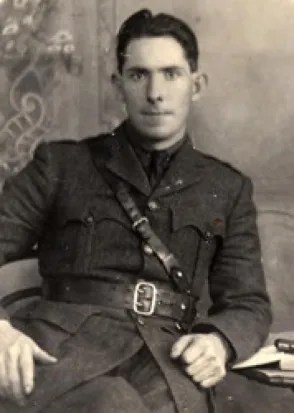
A later account by Seán MacEoin places a further IRA attack on the RIC position at Ballinalee, County Longford, on 8 November 1920. MacEoin later claimed that three policemen were killed and several wounded.
Those casualty figures cannot be securely confirmed. Modern research does not record any verified RIC deaths at Ballinalee on 8 November, and Constable Frederick Taylor, sometimes linked to this action, was actually killed there on 13 December 1920. The safest conclusion is that a further attack may have taken place on 8 November, but the later casualty claims should not be repeated as established fact.
1921 — The Boundary Commission Idea Enters the Treaty Talks
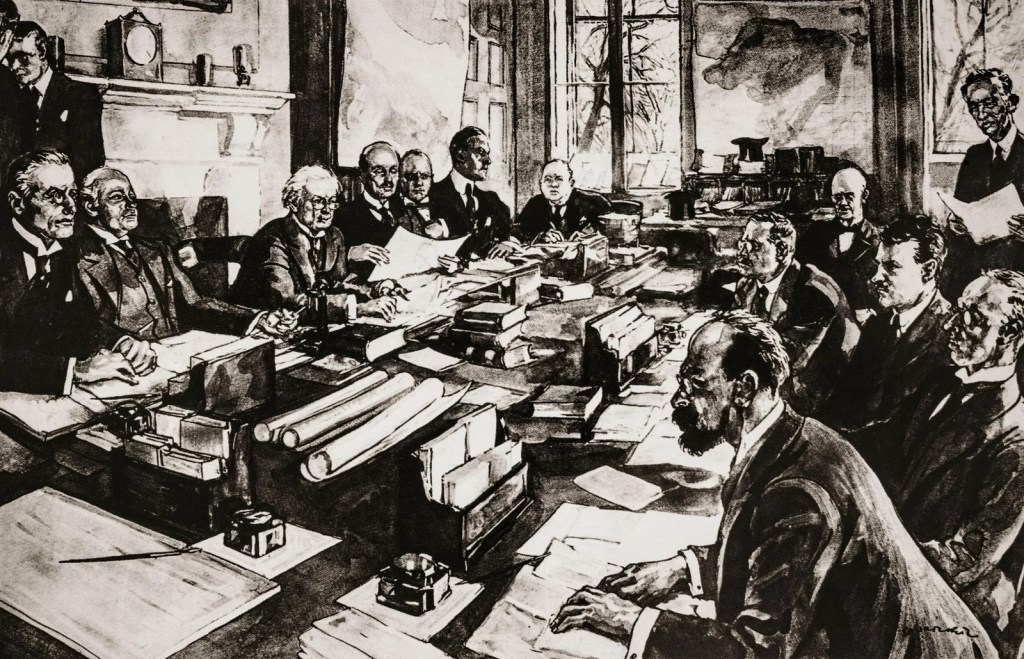
On 8 November 1921, British official Tom Jones met Arthur Griffith and Michael Collins at the Irish delegation’s headquarters in London and floated the idea of a Boundary Commission if Northern Ireland refused to join an all-Ireland settlement.
Jones suggested that such a commission might transfer most of Tyrone and Fermanagh, along with parts of Armagh and Down, to the southern state. Griffith wrote to Éamon de Valera that neither he nor Collins gave a definite opinion at that stage. The proposal would later become one of the most controversial elements of the Treaty settlement.
1922 — Attack on Wellington Barracks
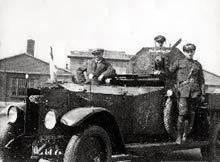
At about 9.40 a.m. on 8 November 1922, anti-Treaty IRA forces launched a major attack on Wellington Barracks on Dublin’s South Circular Road, then occupied by the National Army. Around 150 soldiers were on the parade ground when firing began from positions overlooking the barracks.
National Army soldier Thomas Murphy was killed, while James Finlay later died from his wounds. Other soldiers and civilians were wounded. The attack, associated with the anti-Treaty Dublin Active Service Unit under Bill Roe, showed how the Civil War in Dublin had become an urban guerrilla conflict fought from streets, houses and rooftops.
Why 8 November Matters
The date captures four very different stages of the revolutionary period:
1919: the RIC begins retreating from vulnerable rural positions.
1920: Ballinalee remains a centre of IRA activity, though later casualty claims are uncertain.
1921: the Boundary Commission enters the Treaty negotiations.
1922: anti-Treaty republicans attack soldiers of the new Irish state.
In just three years, the conflict had moved from a policing crisis, to guerrilla war, to political negotiation, and finally to Civil War.
Harvard References
Leeson, D.M. (2011) The Black and Tans: British Police and Auxiliaries in the Irish War of Independence, 1920–1921. Oxford: Oxford University Press.
Documents on Irish Foreign Policy (1921) ‘Arthur Griffith to Eamon de Valera, 8 November 1921’, Documents on Irish Foreign Policy, Vol. 1, document 191. Available at: https://www.difp.ie/volume-1/1921/anglo-irish-treaty/191/ (Accessed: 7 November 2026).
Kenny, C. (2022) ‘Betrayal or breakthrough? Arthur Griffith, the Boundary Commission and an unsigned memorandum’, The Irish Story. Available at: https://www.theirishstory.com/2022/08/12/betrayal-or-breakthrough-arthur-griffith-the-boundary-commission-and-an-unsigned-memorandum/ (Accessed: 7 November 2026).
RTÉ/Century Ireland (n.d.) ‘Attacks on barracks in Dublin and Clifden add to civil war casualties’. Available at: https://www.rte.ie/centuryireland/articles/attacks-on-barracks-in-dublin-and-clifden-add-to-civil-war-casualties (Accessed: 7 November 2026).
UCD Archives (2000) Seán MacEoin Papers, P151: Descriptive Catalogue. Dublin: University College Dublin. Available at: https://www.ucd.ie/archives/t4media/p0151-maceoin-sean-descriptive-catalogue.pdf (Accessed: 7 November 2026).
Irish History 1919–1923 Chronology (n.d.) ‘November 1919’. Available at: http://irishhistory1919-1923chronology.ie/november_1919.htm (Accessed: 7 November 2026).
Irish History 1919–1923 Chronology (n.d.) ‘November 1920’. Available at: http://irishhistory1919-1923chronology.ie/november_1920.htm (Accessed: 7 November 2026).
Irish History 1919–1923 Chronology (n.d.) ‘November 1922’. Available at: http://irishhistory1919-1923chronology.ie/november_1922.htm (Accessed: 7 November 2026).


Leave a Reply