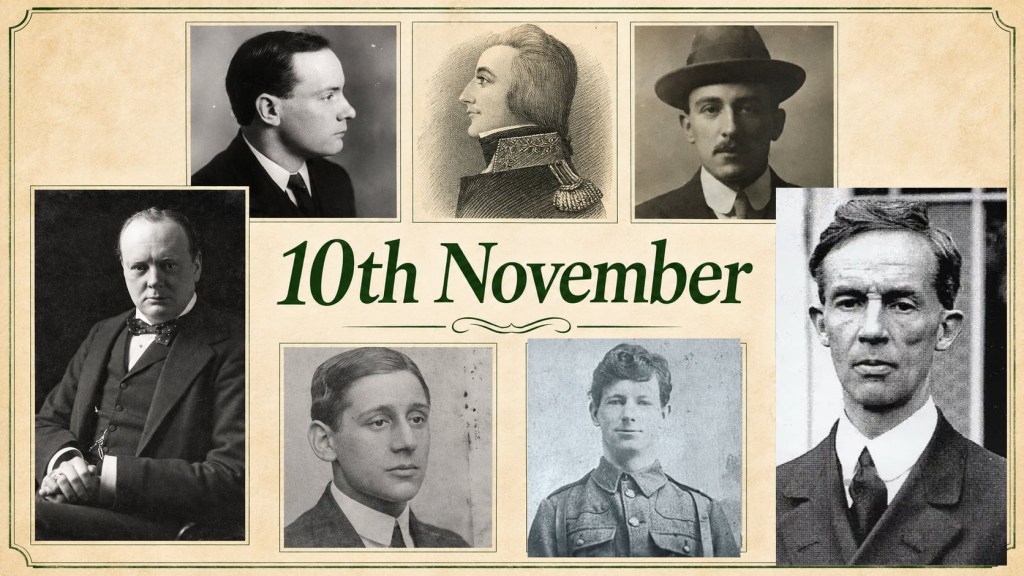
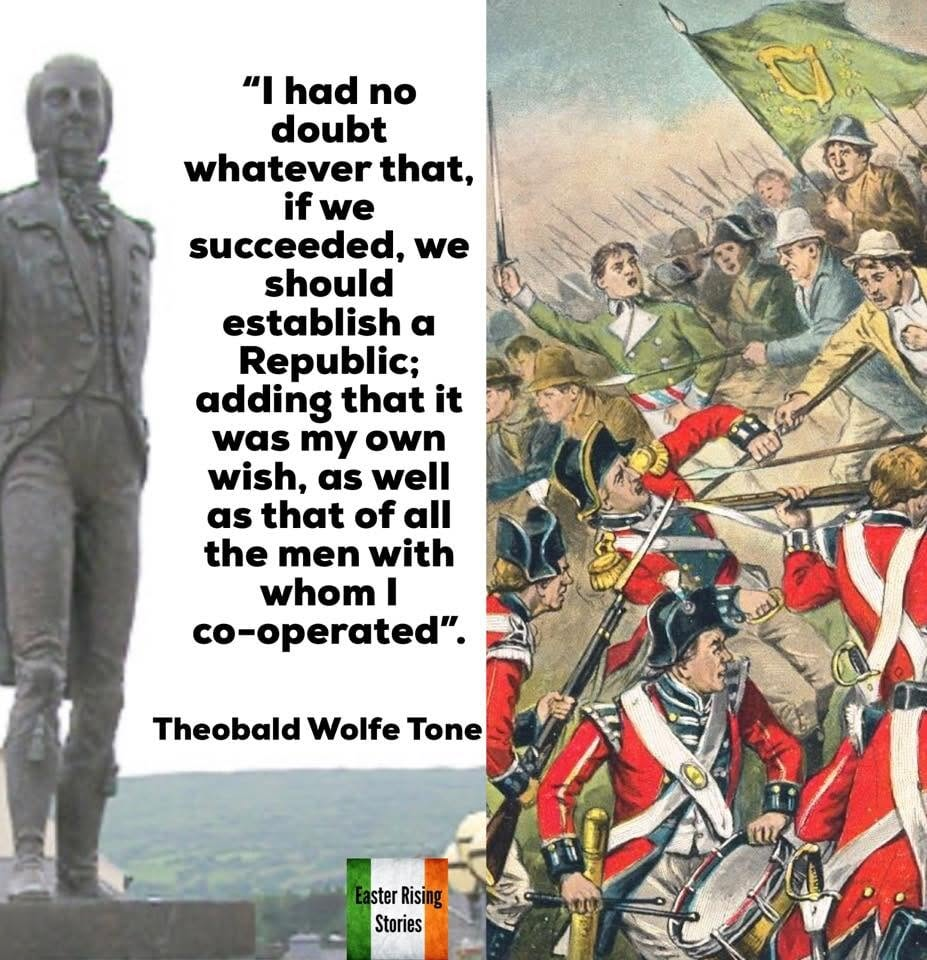
1798 — Wolfe Tone Faces a Court Martial
On 10 November 1798, Theobald Wolfe Tone was brought before a court martial in Dublin following his capture after the defeat of the French expedition at the Battle of Tory Island. Wearing his uniform as a French officer, Tone did not deny that he had sought French assistance to overthrow British rule in Ireland. He objected, however, to being treated simply as a traitor and defended his actions as an attempt to secure Irish independence. The proceedings lasted little more than an hour.
Tone asked to be given “the death of a soldier” and shot rather than hanged. His request was refused and he was sentenced to die two days later. Friends including John Philpot Curran and Peter Burrowes then challenged the legality of trying him before a military court while the ordinary civil courts were operating. A stay was eventually granted, but before it could save him Tone suffered a self-inflicted wound to his throat. He died on 19 November 1798. His life and writings later became enormously influential within Irish republican political memory.
(Credit to Caoilann Brady for this piece on Wolfe Tone)
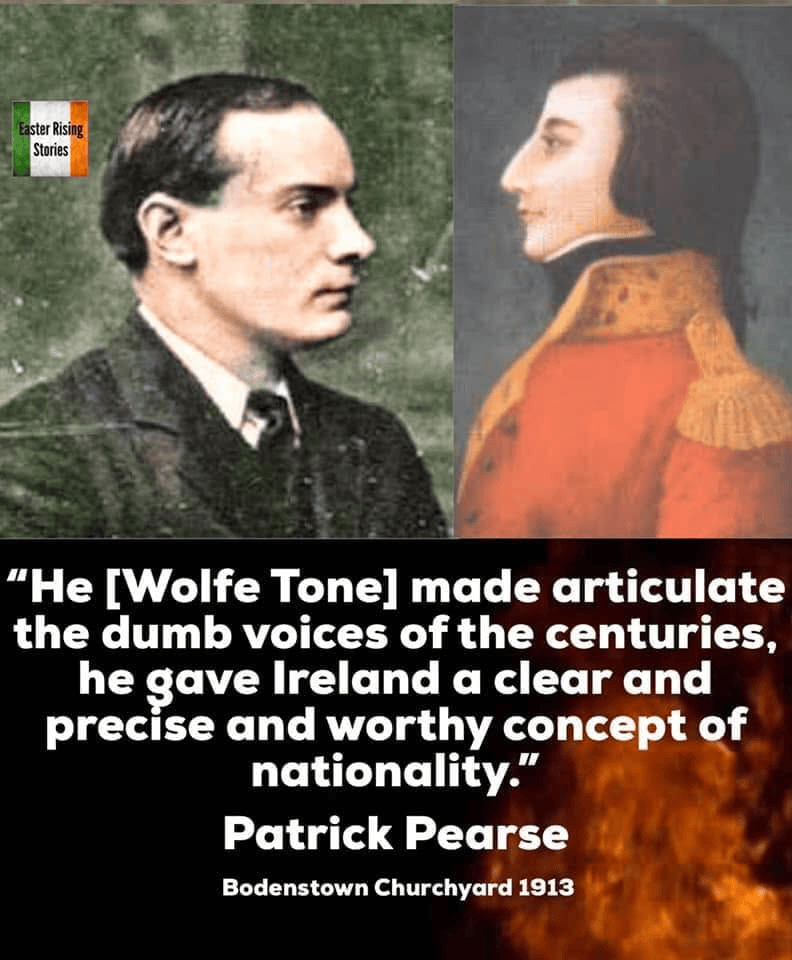
1879 — Patrick Pearse is Born in Dublin
Patrick Henry Pearse was born on 10 November 1879 at 27 Great Brunswick Street, now Pearse Street, Dublin. His father, James Pearse, was an English-born stone carver and monumental sculptor. Pearse became a barrister, writer, Irish-language activist and educationalist, founding St Enda’s School before becoming increasingly involved in revolutionary politics.
Pearse was one of the principal leaders of the Easter Rising of 1916, read the Proclamation outside the GPO and was executed on 3 May 1916. His 1915 graveside speech for Jeremiah O’Donovan Rossa, ending with the warning that “Ireland unfree shall never be at peace”, became one of the best-known statements of revolutionary nationalism.
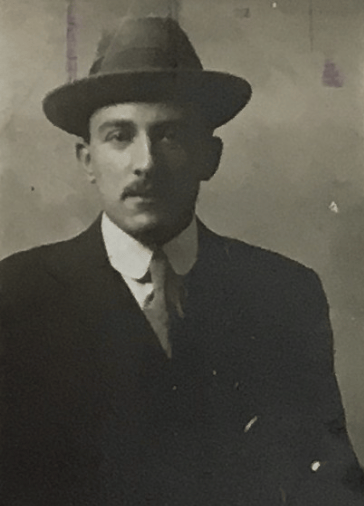
1919 — Detective Wharton is Shot in Dublin
On 10 November 1919, DMP G Division detective Wharton was shot and seriously wounded near the junction of Harcourt Street and Cuffe Street in Dublin. Later accounts identify IRA men Paddy O’Daly and Joe Leonard as involved in the attack. A young student from Sligo, Gertrude O’Hanlon, was also wounded in the shooting. Wharton survived.
The attack formed part of Michael Collins’s developing campaign against the detectives of G Division, who specialised in political surveillance. On the same day, Lord French wrote to RIC Inspector General Joseph Byrne, with the agreement of Walter Long and Ian Macpherson, directing him to take a month’s leave. Byrne’s eventual departure formed part of a wider reorganisation of policing as the conflict intensified.
1920 — Churchill Proposes Authorised Reprisals
On 10 November 1920, British ministers met privately to discuss the deteriorating security situation in Ireland and the growing controversy over unofficial reprisals by Crown forces. Winston Churchill, then Secretary of State for War and Air, argued that uncontrolled reprisals were damaging discipline and proposed replacing them with “regular, authorised and legalised reprisals” carried out under official control.
The proposal reveals the seriousness of the debate within the British government over how to respond to IRA attacks. Ministers did not adopt Churchill’s scheme wholesale, while pressure continued on Chief Secretary Hamar Greenwood to restrain the burning of homes, businesses and creameries. The episode shows that reprisals were not merely a local disciplinary problem: by late 1920 their legality, effectiveness and political consequences were being debated at the highest levels of government.
1921 — The Frieda Gun-Running Reaches Waterford
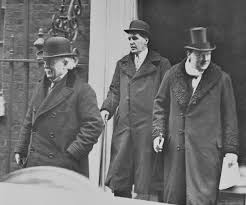
On 10 November 1921, the vessel Frieda reached Waterford Harbour carrying a secret cargo of arms and ammunition purchased in Germany for the IRA. The operation had been organised through republican arms-buying networks involving Robert Briscoe, while the ship was commanded by the colourful sailor and adventurer Charlie McGuinness. Bad weather and fog near Helvick Head delayed its arrival and prevented the crew from making the agreed signal.
McGuinness eventually made contact with Dr Vincent White, who helped arrange the unloading. Pax Whelan, commanding the Waterford Brigade, organised cars to move the weapons to Kilrossanty in the Comeragh Mountains, from where they were distributed to IRA units. Sources disagree over the exact number of rifles and rounds carried, so it is safer not to give a precise figure. Remarkably, the operation took place during the Truce while political negotiations with Britain were still underway.
1922 — Erskine Childers is Arrested
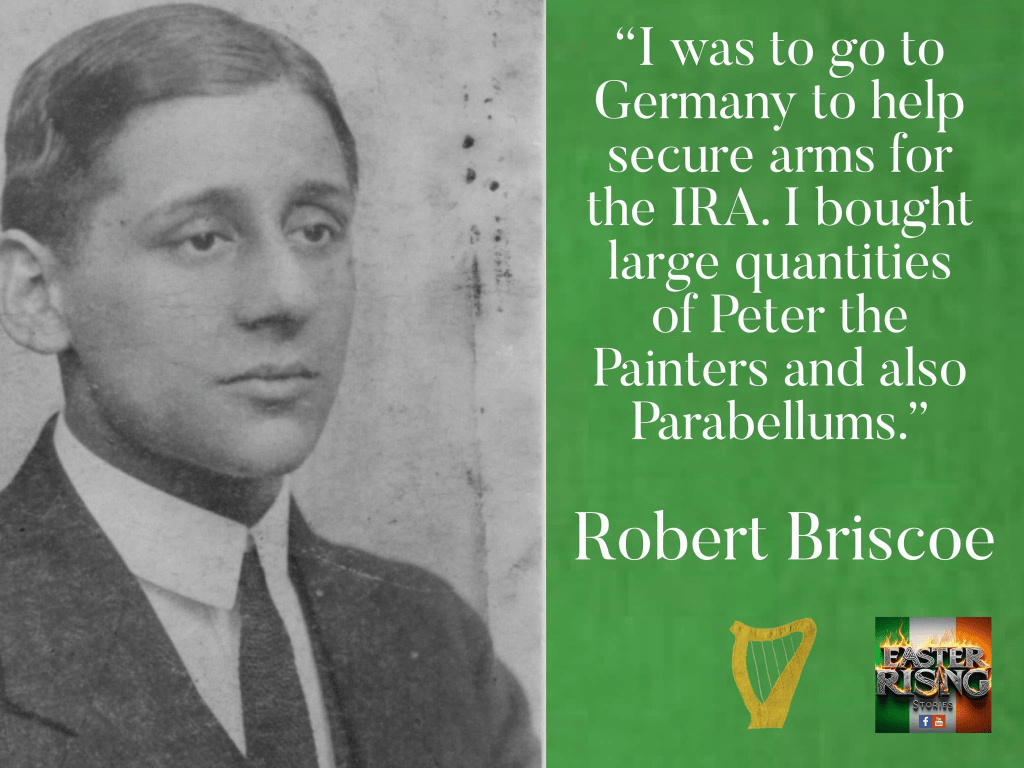
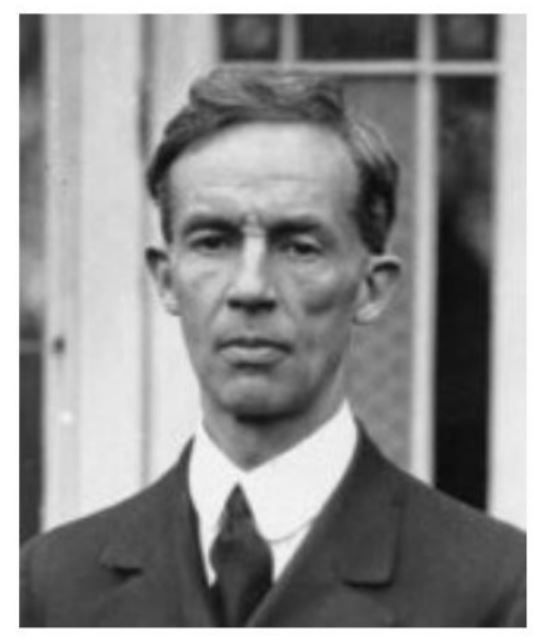
On 10 November 1922, Erskine Childers was arrested at Glendalough House, Annamoe, County Wicklow, the home of his cousin Robert Barton. A small automatic pistol was found in his possession. The weapon had, ironically, been given to Childers as a keepsake by Michael Collins before the two men found themselves on opposite sides of the Treaty divide.
Childers was later tried by a military court for unlawful possession of the weapon and sentenced to death. He was executed by firing squad on 24 November 1922. His arrest on 10 November therefore began the final two weeks of one of the most controversial episodes of the Civil War.
1922 — Craig and Cosgrave Meet
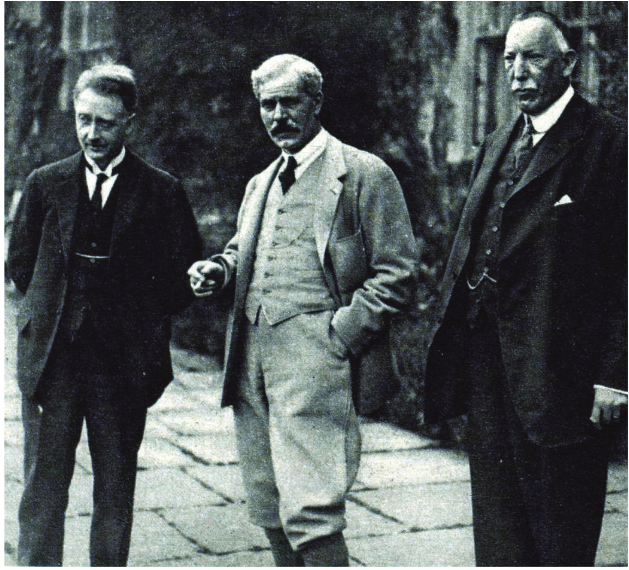
Also on 10 November 1922, James Craig, Prime Minister of Northern Ireland, and W. T. Cosgrave, President of the Irish Provisional Government, met for the first time.
The meeting was an early attempt to establish a working relationship between the governments emerging on either side of the new border. Craig subsequently wrote to his daughter that they had “got on very well together”. The encounter is easily overshadowed by the violence of the Civil War, but it represented the beginning of a difficult political relationship between the two administrations.
Harvard References
Dictionary of Irish Biography (2009) ‘Tone, Theobald Wolfe’. Royal Irish Academy. Available at: https://www.dib.ie/biography/tone-theobald-wolfe-a8590 (Accessed: 10 November 2026).
Dictionary of Irish Biography (2013) ‘Pearse, Patrick Henry’. Royal Irish Academy. Available at: https://www.dib.ie/biography/pearse-patrick-henry-a7247 (Accessed: 10 November 2026).
Dictionary of Irish Biography (2009) ‘Childers, (Robert) Erskine’. Royal Irish Academy. Available at: https://www.dib.ie/node/17195 (Accessed: 10 November 2026).
Dictionary of Irish Biography (2009) ‘Barton, Robert Childers’. Royal Irish Academy. Available at: https://www.dib.ie/biography/barton-robert-childers-a0485 (Accessed: 10 November 2026).
History Ireland (2017) ‘Wolfe Tone and the culture of suicide in eighteenth-century Ireland’. Available at: https://historyireland.com/wolfe-tone-culture-suicide-eighteenth-century-ireland/ (Accessed: 10 November 2026).
Irish History 1919–1923 Chronology (n.d.) ‘November 1919’. Available at: http://irishhistory1919-1923chronology.ie/november_1919.htm (Accessed: 10 November 2026).
Irish History 1919–1923 Chronology (n.d.) ‘November 1920’. Available at: http://irishhistory1919-1923chronology.ie/november_1920.htm (Accessed: 10 November 2026).
Irish History 1919–1923 Chronology (n.d.) ‘November 1921’. Available at: http://irishhistory1919-1923chronology.ie/november_1921.htm (Accessed: 10 November 2026).
Irish History 1919–1923 Chronology (n.d.) ‘November 1922’. Available at: http://irishhistory1919-1923chronology.ie/november_1922.htm (Accessed: 10 November 2026).
O’Halpin, E. and Ó Corráin, D. (2020) The Dead of the Irish Revolution. New Haven and London: Yale University Press.
Hopkinson, M. (1988) Green Against Green: The Irish Civil War. Dublin: Gill and Macmillan.


Leave a Reply