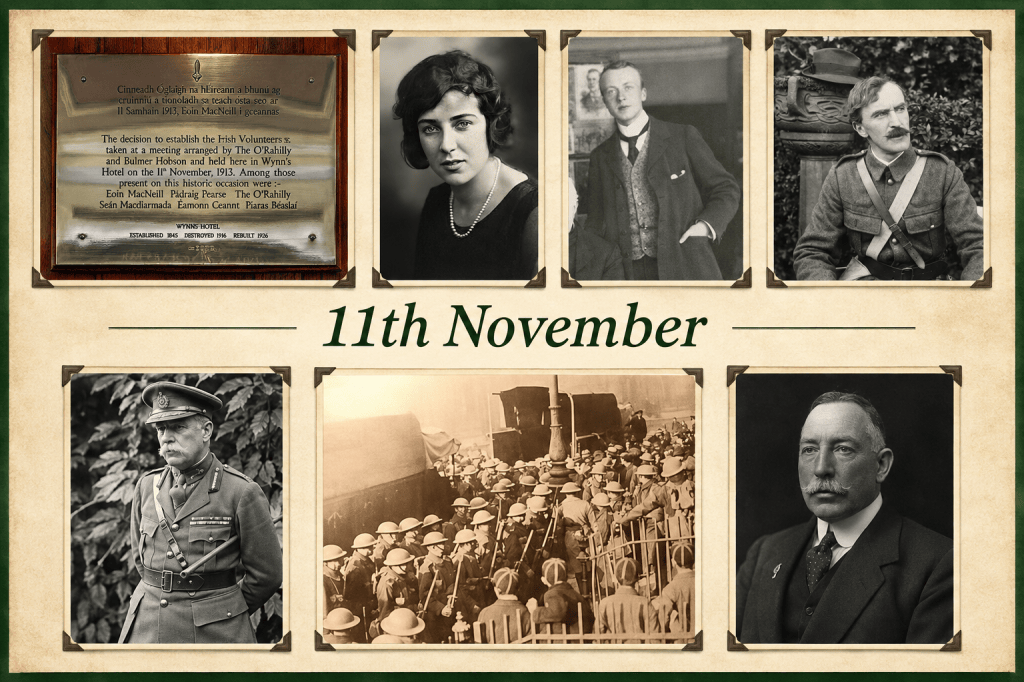
1913 — The Founders of the Irish Volunteers Meet at Wynn’s Hotel
On 11 November 1913, a small group of nationalists met at Wynn’s Hotel, Lower Abbey Street, Dublin, to discuss the creation of a new nationalist volunteer force. Those involved included Eoin MacNeill, The O’Rahilly, Bulmer Hobson, Piaras Béaslaí and others. The group agreed to proceed towards a public launch of what would become the Irish Volunteers. The National Library of Ireland preserves The O’Rahilly’s first draft of the organisation’s objectives, dated that day.
The Volunteers were formally launched at the Rotunda on 25 November 1913. Members of the organisation would later play a central role in the Easter Rising, while the name Óglaigh na hÉireann continued in later republican and state military traditions.
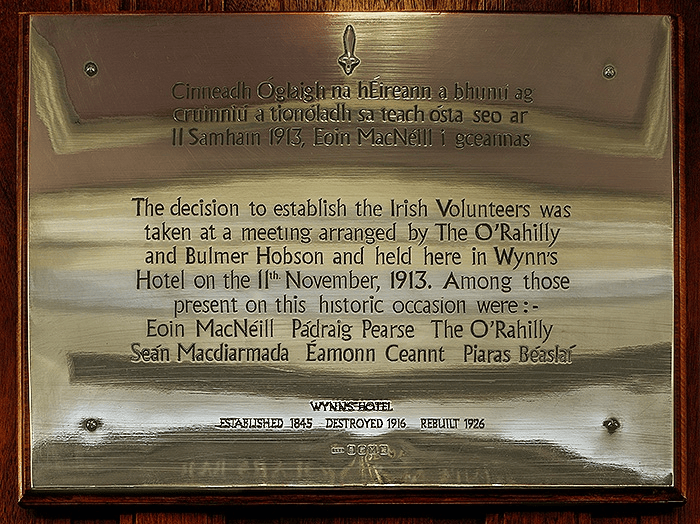
1918 — Armistice Day Brings Celebration and Violence to Dublin
On 11 November 1918, news of the Armistice ending the First World War brought large crowds onto the streets of Dublin. Union Jacks were displayed, soldiers celebrated, and rival political groups came into confrontation. Sinn Féin supporters and Volunteers were also mobilised, and clashes took place around the city.
The disturbances continued over the following days. Soldiers and civilian supporters attacked republican premises, including Sinn Féin headquarters in Harcourt Street, as well as the Mansion House and Liberty Hall. Seumas O’Kelly, editor of Nationality, suffered a cerebral haemorrhage during the disturbances and died on 14 November.
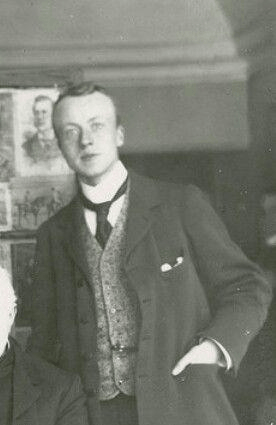
1919 — The Irish Bulletin Begins Publication
On 11 November 1919, the first issue of the Irish Bulletin appeared. Produced by Dáil Éireann’s Department of Propaganda, it was edited initially by Desmond FitzGerald and was designed to present the republican account of events to newspapers, politicians and opinion-formers, particularly overseas. The first print run consisted of only 30 copies.
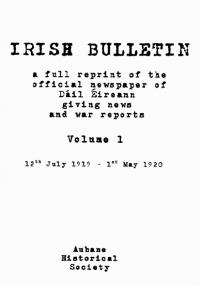
Its circulation expanded rapidly. By May 1921, around 650 copies were being distributed, rising to approximately 900 by the time of the Treaty. The paper continued until December 1921 and became one of the most important instruments in Dáil Éireann’s international publicity campaign. Kathleen McKenna later recalled typing and duplicating the first issue herself. (Credit to Caoilann Brady for Irish Bulletin section)
1919 — Raid on Dáil Éireann Headquarters
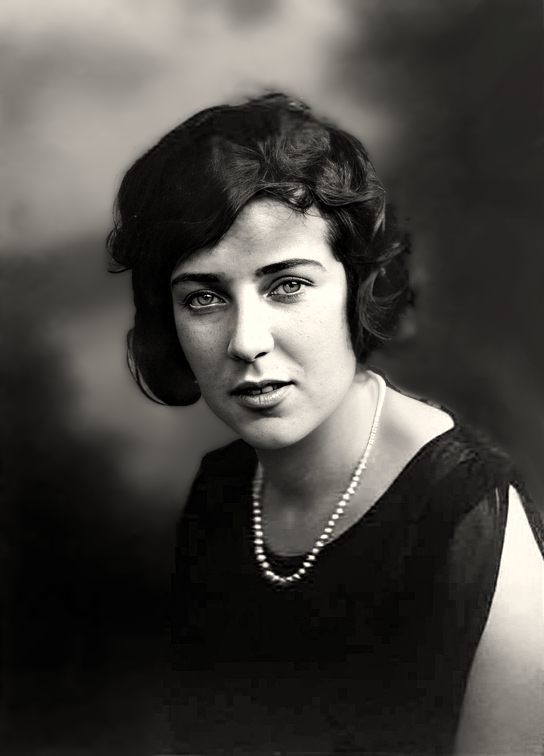
The same day, British forces raided 76 Harcourt Street, then an important Dáil Éireann headquarters. Nine men were arrested, including Richard McKee, Diarmuid O’Hegarty, Seán O’Mahony, John Hayes and Frank Lawless. Contemporary reports described troops entering with fixed bayonets and removing material from the building.
Later accounts state that Michael Collins escaped through a skylight, but that detail is less firmly established than the raid and arrests themselves. What is beyond dispute is that the raid struck directly at the administrative machinery of the underground Dáil on the same day its new propaganda paper first appeared.
1919 — Attempt on Lord French
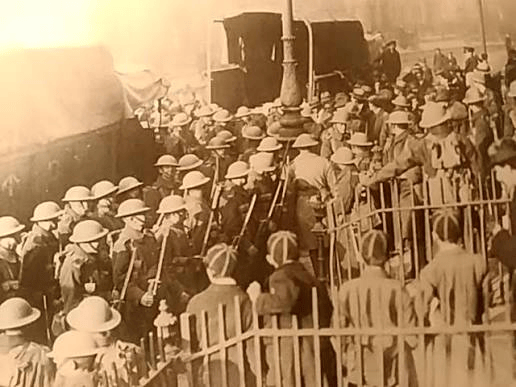
Also on 11 November 1919, IRA men made another attempt to kill Lord French, the Lord Lieutenant of Ireland. Seán Hogan waited at Grattan Bridge expecting French’s car to pass on its way to an Armistice event. Hogan had already removed the pins from two grenades, but French failed to appear. Hogan was forced to carry the live grenades away until replacement pins could be found.
This was one of several failed attempts on French before the much more serious Ashtown ambush of 19 December 1919. A full documentary about the attempt on Lord French can be seen here.
1920 — Government of Ireland Bill Passes the Commons
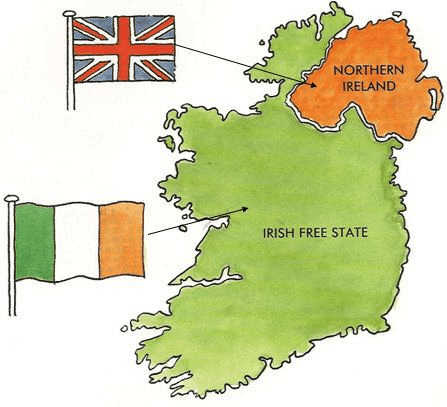
On 11 November 1920, the Government of Ireland Bill passed its third reading in the House of Commons. The legislation provided for separate parliaments in Northern Ireland and Southern Ireland, laying the constitutional basis for partition. Nationalist MP Joe Devlin strongly opposed the Bill, warning about the position of Catholics within the proposed Northern state.
The Bill still had to pass the House of Lords and receive Royal Assent, which came in December. Its passage through the Commons nevertheless marked another decisive stage in turning partition from proposal into law.
1921 — Craig Rejects an All-Ireland Parliament
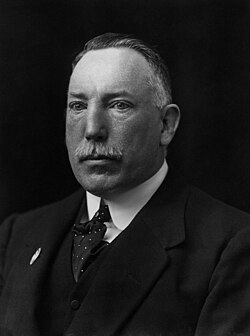
On 11 November 1921, Northern Ireland Prime Minister James Craig replied to Lloyd George’s proposals for an Irish settlement. After consulting his cabinet, Craig rejected any arrangement that would place Northern Ireland under an all-Ireland parliament and also objected to any proposal that could revise the existing six-county boundary.
Craig also floated the possibility of Northern Ireland receiving a status comparable to the southern state rather than accepting subordination to an all-Ireland legislature. His rejection helped deepen the impasse over Ulster and strengthened the importance of the Boundary Commission proposal that was developing within the Treaty negotiations.
Harvard References
House of Commons (1920) ‘Government of Ireland Bill’, Hansard, 11 November 1920, vol. 134. Available at: https://api.parliament.uk/historic-hansard/commons/1920/nov/11/government-of-ireland-bill (Accessed: 10 November 2026).
House of Commons Library (2022) The Anglo-Irish Treaty, 1921. London: House of Commons Library. Available at: https://researchbriefings.files.parliament.uk/documents/CBP-9260/CBP-9260.pdf (Accessed: 10 November 2026).
House of Commons Library (2023) Parliament and Northern Ireland, 1921–2021. London: House of Commons Library. Available at: https://researchbriefings.files.parliament.uk/documents/CBP-8884/CBP-8884.pdf (Accessed: 10 November 2026).
History Ireland (2013) ‘Founding of the Irish Volunteers’. Available at: https://historyireland.com/founding-irish-volunteers/ (Accessed: 10 November 2026).
Kildare County Council Local Studies (2018) ‘Death of Seumas O’Kelly, 100 years ago today’. Available at: https://kildarelibraries.ie/ehistory/death-of-seumas-okelly-100-years-ago-today/ (Accessed: 10 November 2026).
National Library of Ireland (1913) ‘First draft of the objects of the Irish Volunteers made by The O’Rahilly at Wynn’s Hotel, 11 November 1913’, MS 13,019/2. Available at: https://catalogue.nli.ie/Record/vtls000643260 (Accessed: 10 November 2026).
National Library of Ireland (2014) ‘The Irish Bulletin Newspaper (1919–1921)’. Available at: https://www.nli.ie/news-stories/stories/irish-bulletin-newspaper-1919-1921 (Accessed: 10 November 2026).
Oireachtas (2019) 1919–2019: 100 Years of Dáil Éireann. Dublin: Houses of the Oireachtas. Available at: https://data.oireachtas.ie/ie/oireachtas/communications/other/2019/2019-03-28_1919-2019-100-bliain-de-dhail-eireann_en.pdf (Accessed: 10 November 2026).
RTÉ/Century Ireland (n.d.) ‘November 1918: Ireland and the end of the First World War’. Available at: https://centuryireland.rte.ie/centuryireland/articles/november-1918-ireland-the-end-of-the-first-world-war (Accessed: 10 November 2026).
RTÉ/Century Ireland (n.d.) ‘Arthur Griffith claims that arrest of Dáil members has no parallel in history’. Available at: https://www.rte.ie/centuryireland/articles/arrest-of-dail-members-has-no-parallel-in-history (Accessed: 10 November 2026).
Dictionary of Irish Biography (2009) ‘O’Kelly, Seumas’. Royal Irish Academy. Available at: https://www.dib.ie/index.php/biography/okelly-seumas-a6841 (Accessed: 10 November 2026).
Irish History 1919–1923 Chronology (n.d.) ‘November 1919’. Available at: http://irishhistory1919-1923chronology.ie/november_1919.htm (Accessed: 10 November 2026).
Irish History 1919–1923 Chronology (n.d.) ‘November 1920’. Available at: http://irishhistory1919-1923chronology.ie/november_1920.htm (Accessed: 10 November 2026).
Irish History 1919–1923 Chronology (n.d.) ‘November 1921’. Available at: http://irishhistory1919-1923chronology.ie/november_1921.htm (Accessed: 10 November 2026).


Leave a Reply