1916 — The Battle of the Somme Ends
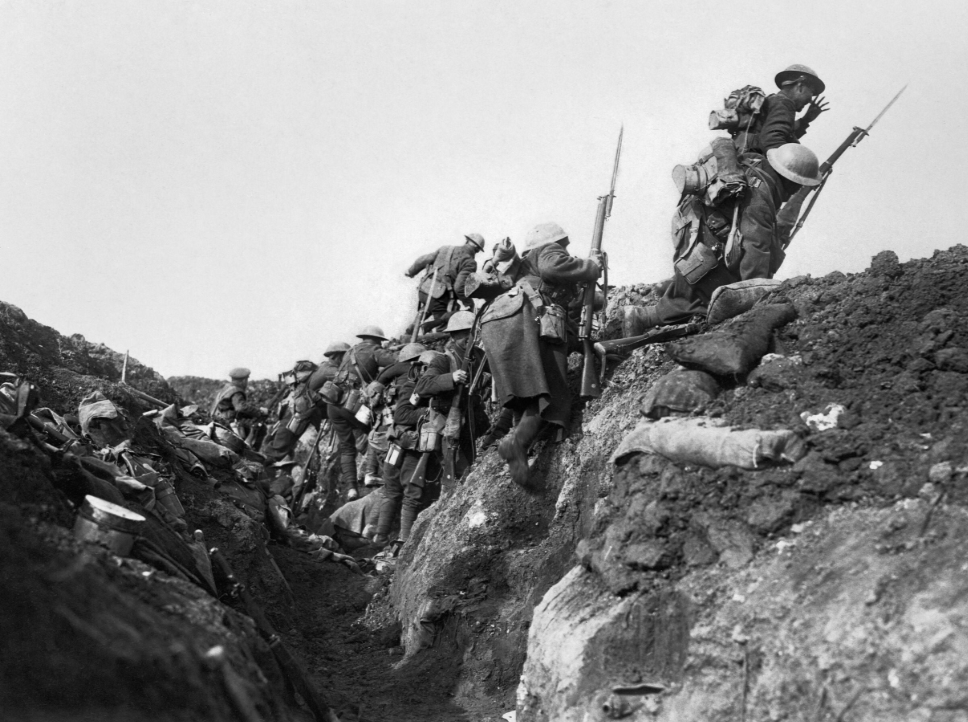
Photo is of a training exercise of British going “over the top” at the Battle of the Somme
On 18 November 1916, after more than four months of fighting, the Battle of the Somme came to an end as worsening weather brought the British offensive to a halt. Since 1 July, British and French forces had advanced only a few miles at enormous human cost. The British Empire suffered about 420,000 casualties, while French losses were approximately 200,000.
Irish soldiers had fought on several of the battle’s most important sectors. The 36th (Ulster) Division suffered approximately 5,500 casualties on 1 July, while the largely nationalist 16th (Irish) Division later captured Guillemont and Ginchy during September. The National Army Museum records the 16th Division’s capture of Ginchy on 9 September despite severe machine-gun fire and heavy losses.
The Somme subsequently assumed particular importance in Ulster unionist memory, especially through commemoration of the 36th Division, while the service of the 16th Division became increasingly overshadowed in independent Ireland by memories of the Easter Rising and revolution.
1920 — Irish College and Co-operative Premises Burned in Donegal
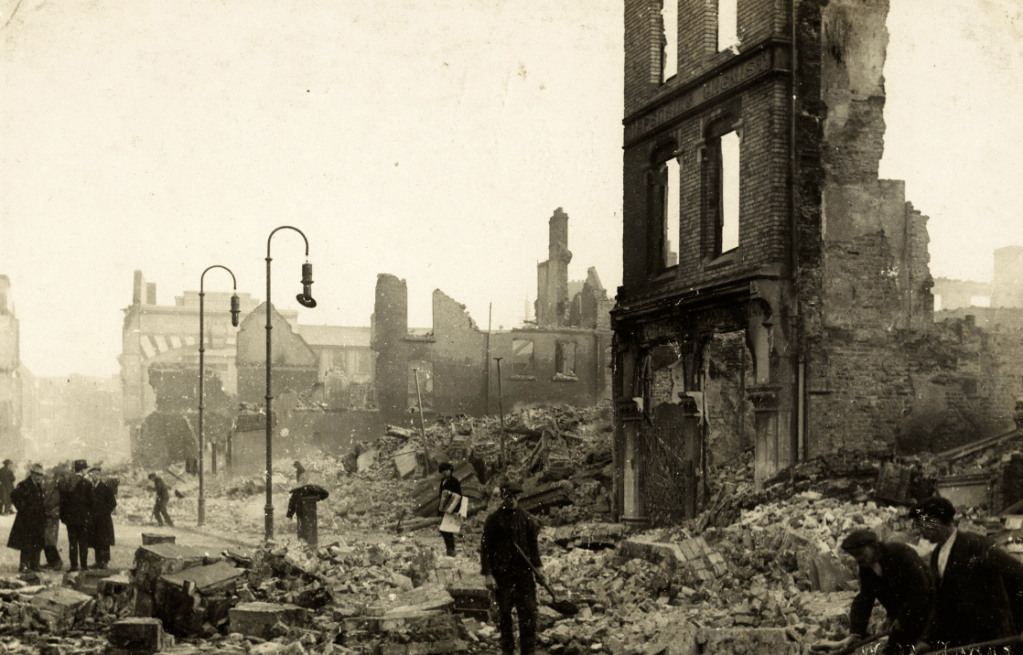
Photo from the burning of Cork which would occur in December 1920, a month after the incident in Donegal.
On 18 November 1920, Crown forces were reported to have burned buildings associated with the Irish-language movement at Cloghaneely in County Donegal, including premises connected with the local Irish college and co-operative movement.
The destruction formed part of the wider pattern of reprisals and property destruction that accompanied the War of Independence. Cultural and economic institutions associated with nationalism could become targets alongside the homes and businesses of suspected republican supporters.
1920 — Basil Clarke Appointed to Direct British Publicity in Ireland
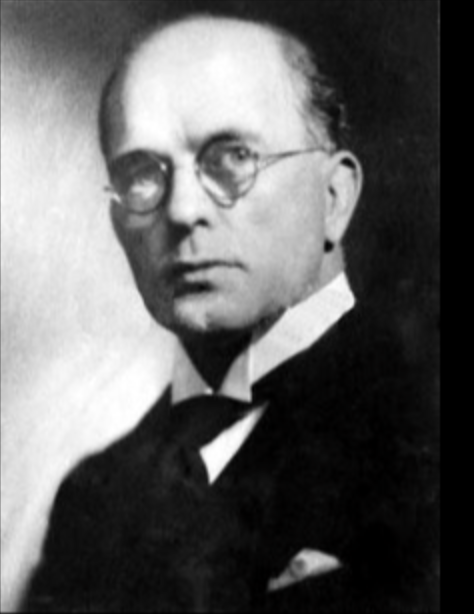
Basil Clarke, regarded as the UK’s first public relations professional
Also on 18 November 1920, Chief Secretary Sir Hamar Greenwood announced the appointment of journalist and former wartime press officer Basil Clarke to organise British government publicity in Ireland.
Clarke was charged with improving the supply of officially authenticated information to the press at a time when British policy was facing intense criticism at home and abroad. His appointment reflected growing recognition that the conflict was being fought not only through military operations but through competing accounts of raids, shootings, reprisals and civilian casualties.
Dáil Éireann’s Irish Bulletin was already proving highly effective in circulating the republican version of events, making control of information an increasingly important element of the British counter-insurgency campaign.
1921 — RIC in the Six Counties Placed at Northern Government’s Disposal
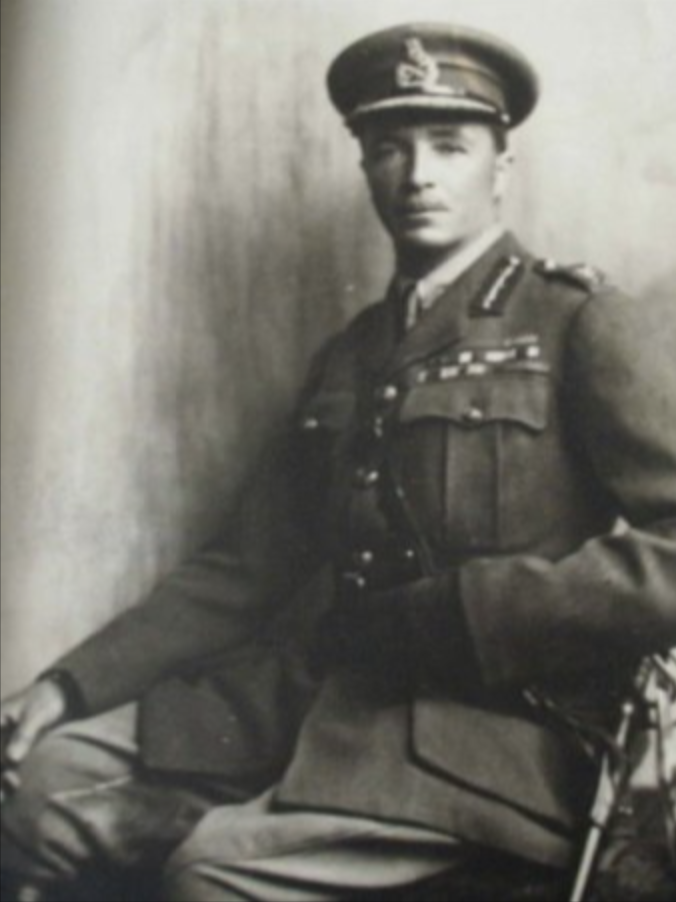
Sir Henry Hugh Tudor
On 18 November 1921, General Sir Henry Tudor, Chief of Police in Ireland, issued instructions concerning the future control of the Royal Irish Constabulary in the six counties that formed what was called Northern Ireland.
The RIC was not immediately transferred into Northern Irish ownership. Instead, arrangements were made for the force operating in the six counties to be placed at the disposal of the Northern Ireland government from 22 November. The measure formed part of the wider administrative transfer of powers that was making partition an increasingly concrete political and governmental reality.
On the same day, senior civil servant Warren Fisher circulated a memorandum reflecting critically on earlier British policy in Ireland, including the suppression of Sinn Féin. He argued that repression had helped strengthen rather than destroy support for physical-force republicanism.
1922 — Lily Bennett Killed During Dublin Demonstration
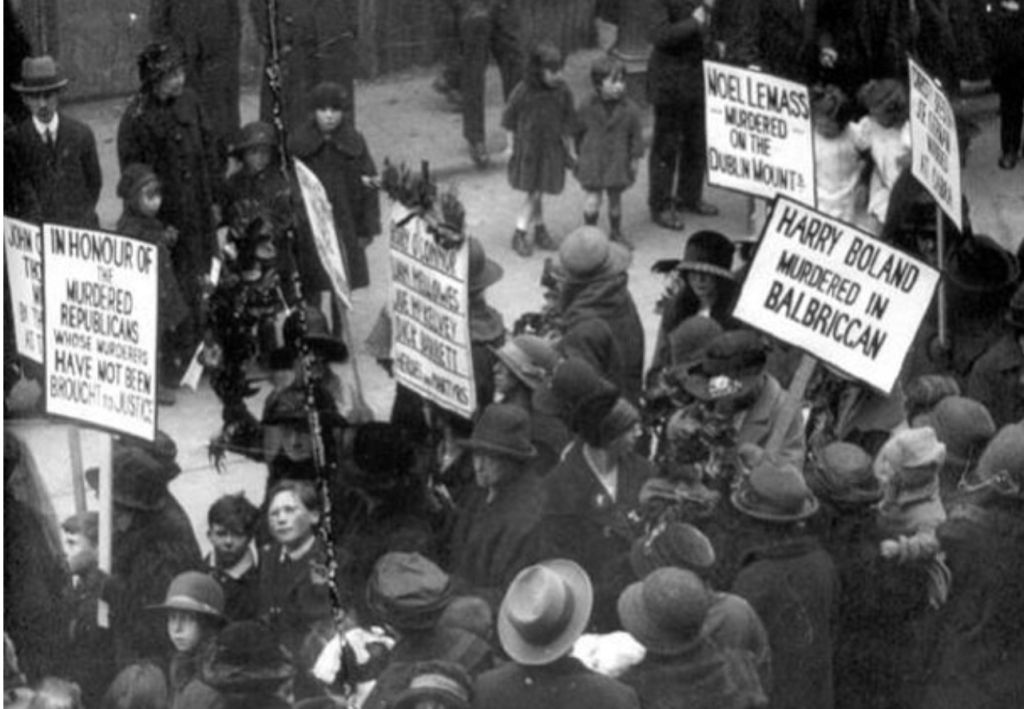
1922 anti treaty demonstration
On 18 November 1922, Lily Bennett, a young member of Cumann na mBan, was fatally shot during a republican demonstration on O’Connell Street, Dublin, organised in support of imprisoned anti-Treaty republicans. Her death occurred only one day after the Free State carried out the first official executions of Civil War prisoners at Kilmainham Gaol.
Free State troops intervened during the demonstration and shots were fired amid the disturbance. Bennett was struck and killed. Contemporary republican accounts portrayed her death as another example of the increasing use of military force by the Provisional Government, although the precise sequence of events surrounding the shooting should be treated cautiously.
Her death became part of republican memory of the Civil War and highlighted the involvement of Cumann na mBan in opposition to the Treaty and in supporting republican prisoners.
1922 — Fatal Shooting at Killaloe
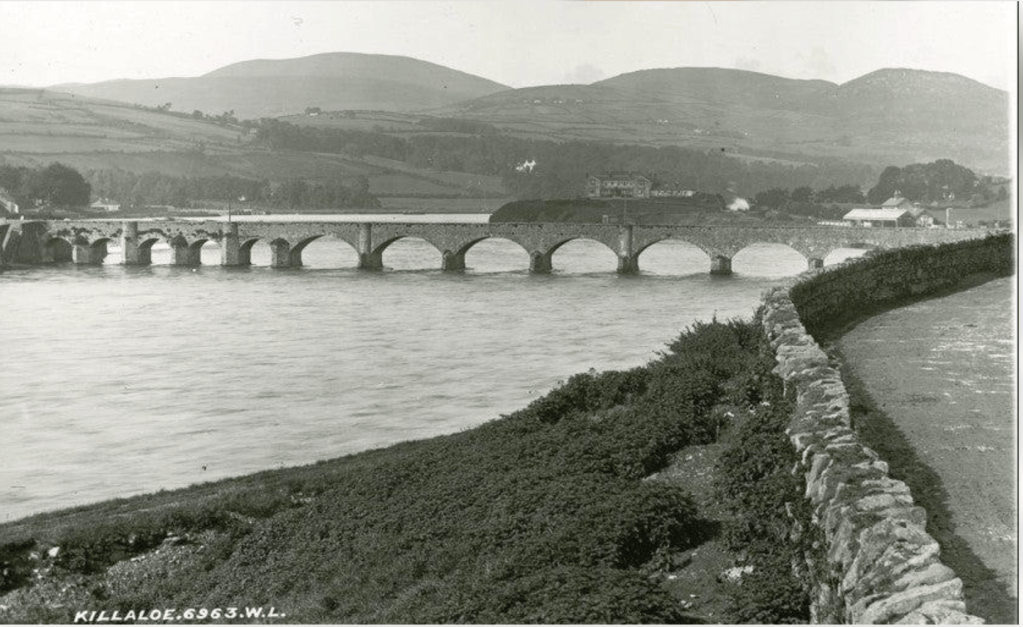
Killaloe
Also on 18 November 1922, anti-Treaty IRA men opened fire during an incident at a dance in Killaloe, County Clare. A National Army sergeant was killed.
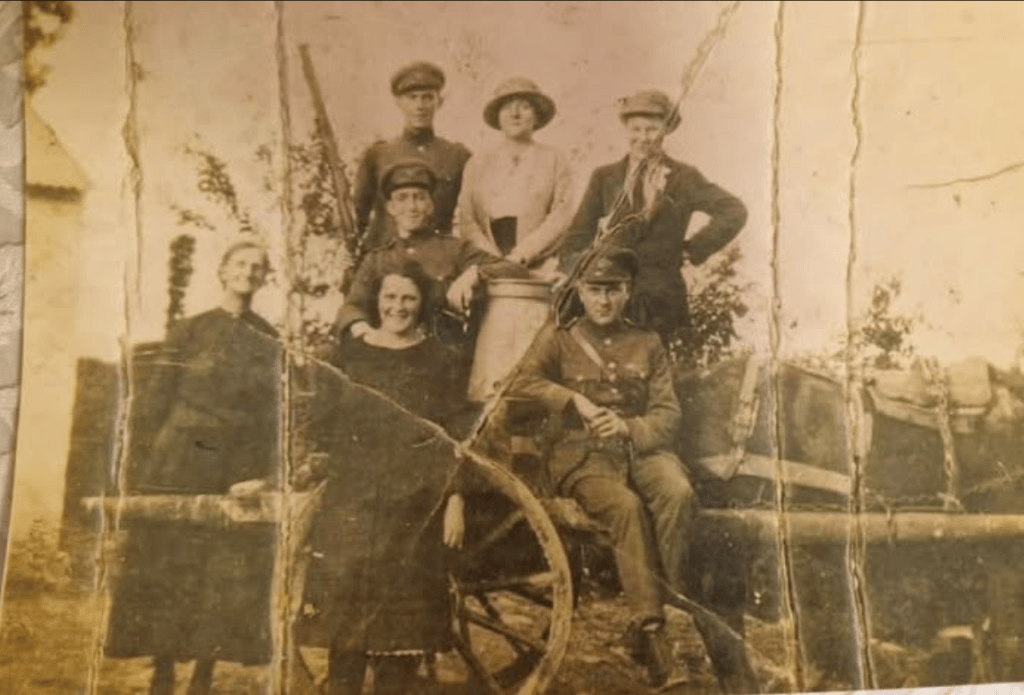
Civil War-era group in County Clare. Used here as a contemporary illustration of the conflict in the county during 1922.
The episode illustrates how Civil War violence extended well beyond formal engagements between military units. Social gatherings, homes, roads and public spaces could all become scenes of armed confrontation as local political divisions hardened into violence.
References
National Army Museum (n.d.) ‘Battle of the Somme’. Available at: https://www.nam.ac.uk/explore/battle-somme (Accessed: 16 November 2026).
National Army Museum (n.d.) ‘The Battle of Ginchy, 9 September 1916’. Available at: https://collection.nam.ac.uk/detail.php?acc=1995-03-88-22 (Accessed: 16 November 2026).
National Army Museum (n.d.) ‘Lorry transport on the Somme, September 1916’. Available at: https://collection.nam.ac.uk/detail.php?acc=1978-11-157-4-27 (Accessed: 16 November 2026).
National Army Museum (2015) ‘The Irish Soldier’s Experience of the First World War’. Available at: https://ww1.nam.ac.uk/1669/news/irish-soldiers-experience-first-world-war/ (Accessed: 16 November 2026).
Irish History 1919–1923 Chronology (n.d.) ‘November 1920’. Available at: http://irishhistory1919-1923chronology.ie/november_1920.htm (Accessed: 16 November 2026).
Irish History 1919–1923 Chronology (n.d.) ‘November 1921’. Available at: http://irishhistory1919-1923chronology.ie/november_1921.htm (Accessed: 16 November 2026).
House of Commons Library (2020) Parliament and Northern Ireland, 1921–2021. London: House of Commons Library. Available at: https://researchbriefings.files.parliament.uk/documents/CBP-8884/CBP-8884.pdf (Accessed: 16 November 2026).
Irish History 1919–1923 Chronology (n.d.) ‘November 1922’. Available at: http://irishhistory1919-1923chronology.ie/november_1922.htm (Accessed: 16 November 2026).


Leave a Reply