1920 — Bloody Sunday in Dublin
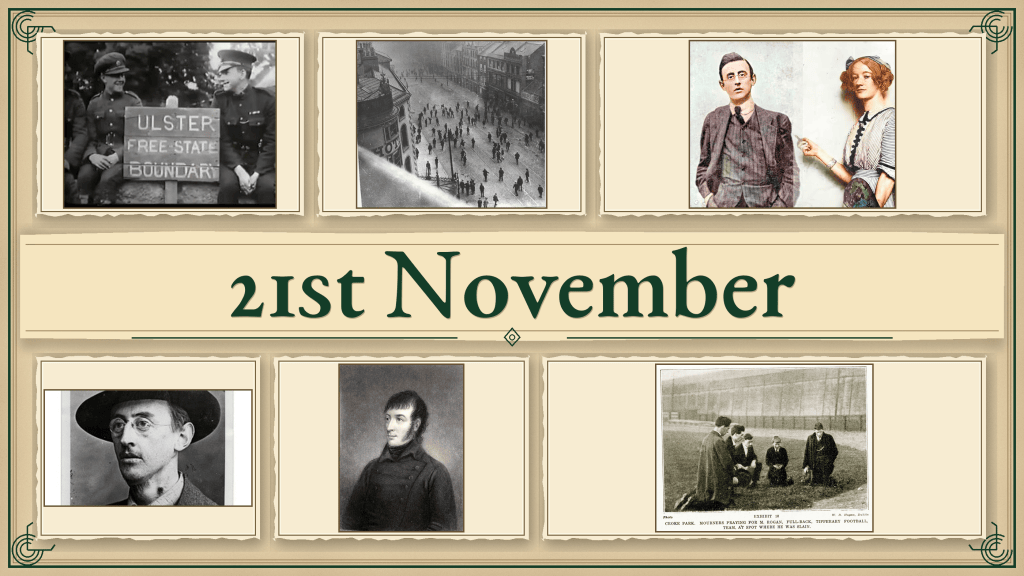
On 21 November 1920, Dublin experienced one of the most violent days of the Irish War of Independence. The day unfolded in three distinct phases: coordinated IRA attacks on suspected British intelligence personnel in the morning, the shooting of spectators at Croke Park that afternoon, and the deaths of three prisoners in British custody that night.
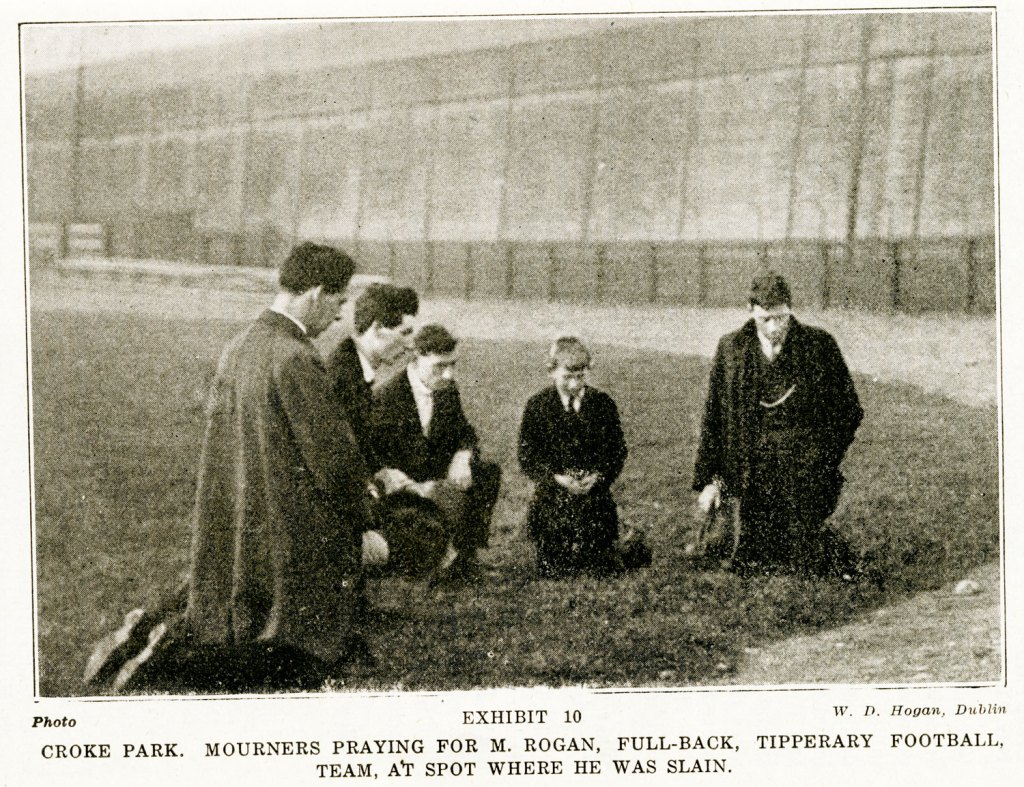
Early that morning, IRA units acting under Michael Collins’s intelligence organisation attacked a series of houses, flats and hotels across south Dublin. The targets were men believed to be involved in British intelligence operations against the IRA. Fourteen men were killed in the coordinated attacks. Although the group is often collectively labelled the “Cairo Gang”, the men killed were not all members of one clearly defined intelligence unit. (rte.ie)
That afternoon, thousands of spectators gathered at Croke Park for a challenge football match between Dublin and Tipperary. The match was scheduled for 2.45 p.m. but began late because of congestion outside the ground. British Crown forces arrived shortly afterwards and opened fire. Fourteen people were killed and dozens wounded, including Tipperary footballer Michael Hogan, after whom the Hogan Stand was later named. (gaa.ie)
The final killings came that evening inside Dublin Castle. IRA officers Dick McKee and Peadar Clancy, arrested the previous night, and civilian Conor Clune were killed while in custody. British authorities claimed they had attempted to escape; contemporary republican witnesses and later historical research have strongly disputed that account. (rte.ie)
By the end of Bloody Sunday, 31 people had been killed. The events transformed public perceptions of the conflict and became one of the defining episodes of the War of Independence.
Here is a documentary made with historians and authors Derek Molyneux and Darren Kelly about it.
here is a depiction of the afternoon
1767 — Birth of Thomas Russell
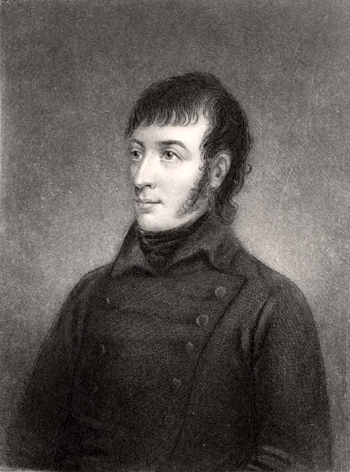
On 21 November 1767, Thomas Russell was born at Drommahane, Kilshannig, near Mallow, County Cork. Raised in an Anglican military family, he initially followed a military career before becoming increasingly influenced by radical and democratic political ideas. (dib.ie)
Russell became one of the founding members of the Society of United Irishmen and was a close friend of Wolfe Tone. He worked extensively in Ulster and became particularly associated with efforts to unite Presbyterians, Catholics and Anglicans behind parliamentary reform and ultimately republican separatism.
After becoming involved in Robert Emmet’s failed rising of 1803, Russell was captured, tried and hanged at Downpatrick on 21 October 1803. He later entered popular memory as the subject of the ballad “The Man from God Knows Where.”
1887 — Birth of Joseph Mary Plunkett
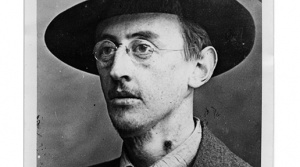
On 21 November 1887, Joseph Mary Plunkett was born at 26 Upper Fitzwilliam Street, Dublin, the eldest son of George Noble Plunkett and Josephine Cranny. Plunkett became a poet, journalist, Irish-language enthusiast and member of the Irish Republican Brotherhood. (dib.ie)
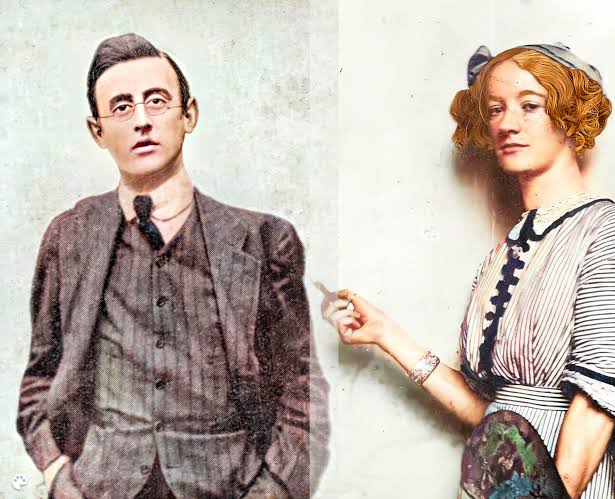
Despite suffering from tuberculosis and recovering from major surgery shortly before Easter 1916, Plunkett joined the Rising leadership in the GPO and signed the Proclamation of the Irish Republic. He was the youngest of the seven signatories.
Hours before his execution, he married Grace Gifford in Kilmainham Gaol. Plunkett was executed by firing squad on 4 May 1916, aged 28. (cso.ie)
Here is a documentary I made with his relatives.
1921 — Belfast Enters Another Week of Severe Violence
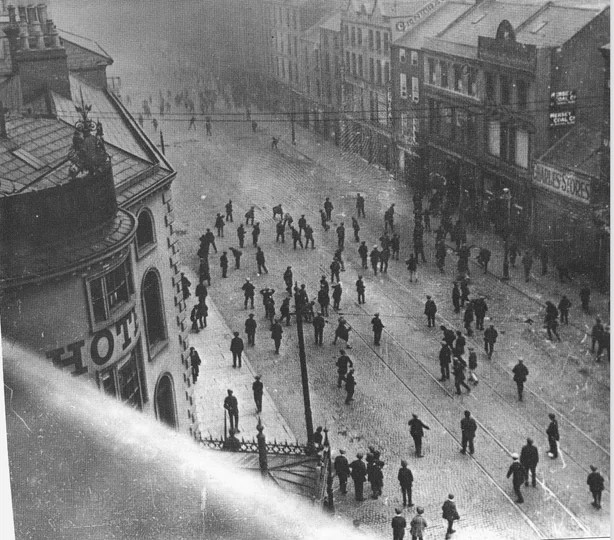
On 21 November 1921, serious communal violence continued in Belfast, beginning one of the bloodiest periods of the Truce era. Between 21 and 25 November, shootings, bombings and street fighting spread through several working-class districts.
The violence formed part of the wider Belfast conflict that had begun in 1920 and would continue into 1922. Contemporary and later research records 32 deaths during November 1921 alone, with Catholics suffering disproportionately across the wider two-year conflict. (cain.ulster.ac.uk)
The killings demonstrated that the July 1921 Truce between the IRA and Crown forces had not brought peace to Belfast. As negotiations continued in London, sectarian and political violence remained a central unresolved problem in the emerging Northern Ireland state.
1922 — Essexford Ambush on the Louth–Monaghan Border
On 21 November 1922, anti-Treaty IRA forces ambushed a National Army patrol at Essexford on the Louth–Monaghan border.
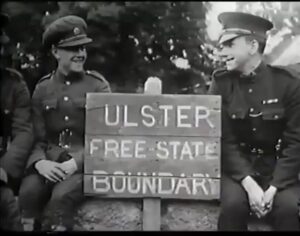
Six National Army soldiers were wounded and the anti-Treaty force captured their rifles and ammunition. One of the wounded soldiers, Private Bernard Conaty, aged 22, later died in Louth County Infirmary on 23 November. (ucc.ie)
The incident demonstrated the continuing strength of anti-Treaty guerrilla activity in the border region during the winter of 1922.
1922 — Northern Nationalists Maintain Non-Recognition of Stormont
Also on 21 November 1922, representatives of northern nationalism met in Dublin. Both Sinn Féin nationalists and supporters of the Ancient Order of Hibernians were represented.
The meeting resolved to continue the policy of non-recognition of the Northern Ireland government, reflecting the continuing refusal of many nationalists to accept the legitimacy or permanence of partition. (irishhistory1919-1923chronology.ie)
References
Dictionary of Irish Biography (2009) ‘Russell, Thomas’. Royal Irish Academy. Available at: https://www.dib.ie/biography/russell-thomas-a7846
Dictionary of Irish Biography (2009) ‘Plunkett, Joseph Mary’. Royal Irish Academy. Available at: https://www.dib.ie/index.php/biography/plunkett-joseph-mary-a7389
Central Statistics Office (2016) ‘Joseph Mary Plunkett’, Life in 1916 Ireland: Stories from Statistics. Available at: https://www.cso.ie/en/releasesandpublications/ep/p-1916/1916irl/cpr/cmp/jmp/
RTÉ/Century Ireland (n.d.) ‘Bloody Sunday, 1920 — killing and dying in the Irish revolution’. Available at: https://centuryireland.rte.ie/centuryireland/articles/bloody-sunday-1920-killing-dying-in-the-irish-revolution
RTÉ/Century Ireland (n.d.) ‘Mapping Bloody Sunday, 21 November 1920’. Available at: https://centuryireland.rte.ie/centuryireland/articles/mapping-bloody-sunday-21-november-1920
Gaelic Athletic Association (n.d.) ‘GAA Timeline 1884–1945’. Available at: https://www.gaa.ie/the-gaa/history/1884-1945
RTÉ Archives (2020) ‘Frank Thornton recalls Bloody Sunday’. Available at: https://www.rte.ie/archives/2020/1110/1177334-frank-thornton-bloody-sunday/
CAIN (n.d.) Hall, D., The Belfast Troubles 1920–1922. Available at: https://cain.ulster.ac.uk/islandpublications/hall21-ip130.pdf
History Ireland (2020) ‘Facts and fallacies of the Belfast pogrom’. Available at: https://historyireland.com/facts-and-fallacies-of-the-belfast-pogrom/
University College Cork (n.d.) ‘Irish Civil War Fatalities Project: Explore the Fatalities Map’. Available at: https://www.ucc.ie/en/theirishrevolution/irish-civil-war-fatalities-project/explore-the-fatalities-map/
Irish History 1919–1923 Chronology (n.d.) ‘November 1922’. Available at: https://irishhistory1919-1923chronology.ie/november_1922.htm


Leave a Reply