1883 — Birth of Rory O’Connor
On 28 November 1883, Roderick ‘Rory’ O’Connor was born at 23 Kildare Street, Dublin, the son of solicitor John O’Connor and Julia O’Connor. A qualified civil engineer, he worked in Canada before returning to Ireland, where he became involved in the Gaelic League, Irish Republican Brotherhood and Irish Volunteers.
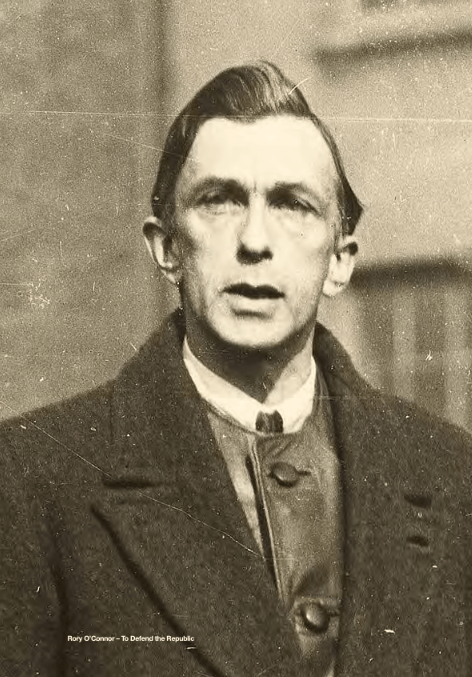
During the War of Independence, O’Connor served as the IRA’s Director of Engineering and was involved in extending republican operations to Britain. A prominent opponent of the Anglo-Irish Treaty, he became one of the leaders of the anti-Treaty occupation of the Four Courts in April 1922. The National Army bombardment of the building on 28 June marked the beginning of open Civil War.
O’Connor was executed at Mountjoy Prison on 8 December 1922 alongside Liam Mellows, Richard Barrett and Joseph McKelvey, in reprisal for the killing of pro-Treaty TD Seán Hales.
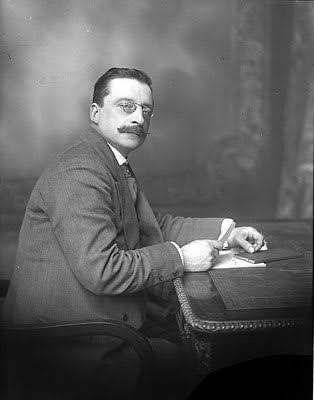
1905 — The Foundation of Sinn Féin
On 28 November 1905, the first annual convention of the National Council took place at the Rotunda in Dublin. Arthur Griffith presented his political programme, advocating Irish abstention from Westminster, economic self-reliance and the establishment of an Irish national legislature.
Griffith drew inspiration from Hungary’s constitutional relationship with Austria, envisaging a system under which Ireland would possess its own parliament while sharing a monarch with Britain.
Although 28 November 1905 is traditionally regarded as the foundation date of Sinn Féin, the party developed through the amalgamation of several nationalist organisations over the following years. Its political direction changed considerably after the Easter Rising, and under Éamon de Valera it adopted a republican platform in 1917 before achieving its overwhelming electoral victory in December 1918.
1920 — The Kilmichael Ambush
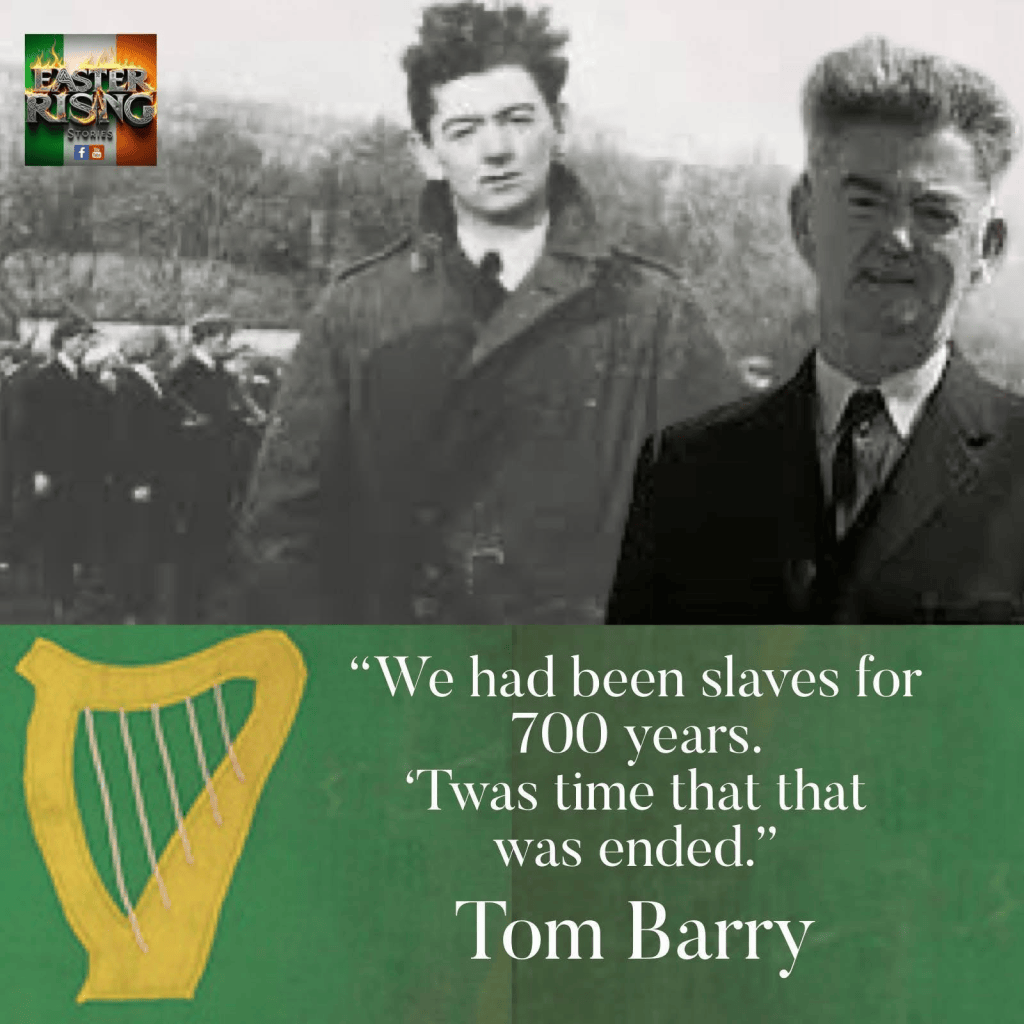
On 28 November 1920, one week after Bloody Sunday in Dublin, the IRA’s West Cork flying column, commanded by Tom Barry, ambushed a patrol of the Auxiliary Division of the Royal Irish Constabulary at Kilmichael, County Cork.
Barry, a former British soldier who had served during the First World War, had become a leading figure in the West Cork IRA. The confrontation resulted in devastating losses for the Auxiliary patrol. Three IRA Volunteers — Michael McCarthy, Jim O’Sullivan and Pat Deasy — also lost their lives.
The False Surrender Controversy
One of the most enduring historical controversies surrounding Kilmichael concerns Tom Barry’s account of an alleged false surrender by members of the Auxiliary patrol.
Barry maintained that the Auxiliaries pretended to surrender before resuming their attack. Historian Peter Hart challenged this account in his 1998 book The IRA and Its Enemies, arguing that the false surrender narrative had been used to justify the killings.
Subsequent historians have challenged aspects of Hart’s research, identifying early accounts and testimony that lend support to the existence of a false surrender. Nevertheless, historians continue to disagree over the precise circumstances of the incident and the reliability of the surviving evidence.
The Consequences of Kilmichael
The ambush marked a significant escalation in the Irish War of Independence. British Prime Minister David Lloyd George acknowledged that Kilmichael differed from previous IRA attacks, describing it as a military operation.
On 10 December 1920, martial law was introduced in counties Cork, Kerry, Limerick and Tipperary. It was subsequently extended to Clare, Waterford, Kilkenny and Wexford in January 1921.
Kilmichael became one of the most commemorated events of the War of Independence and remains the subject of considerable historical debate.
1920 — The IRA Extends Its Campaign to Liverpool
During the night of 27–28 November 1920, the IRA carried out a coordinated campaign of arson against commercial premises in Liverpool and Bootle. Cotton warehouses, timber yards and other commercial properties were targeted, causing extensive damage.
A civilian, William Ward, was fatally shot during the disturbances. Sources differ regarding the precise number of premises destroyed and the total financial cost of the operation.
The attacks represented a significant extension of the War of Independence to Britain itself. The IRA sought to impose economic costs on Britain and demonstrate that the conflict could not be confined to Ireland.
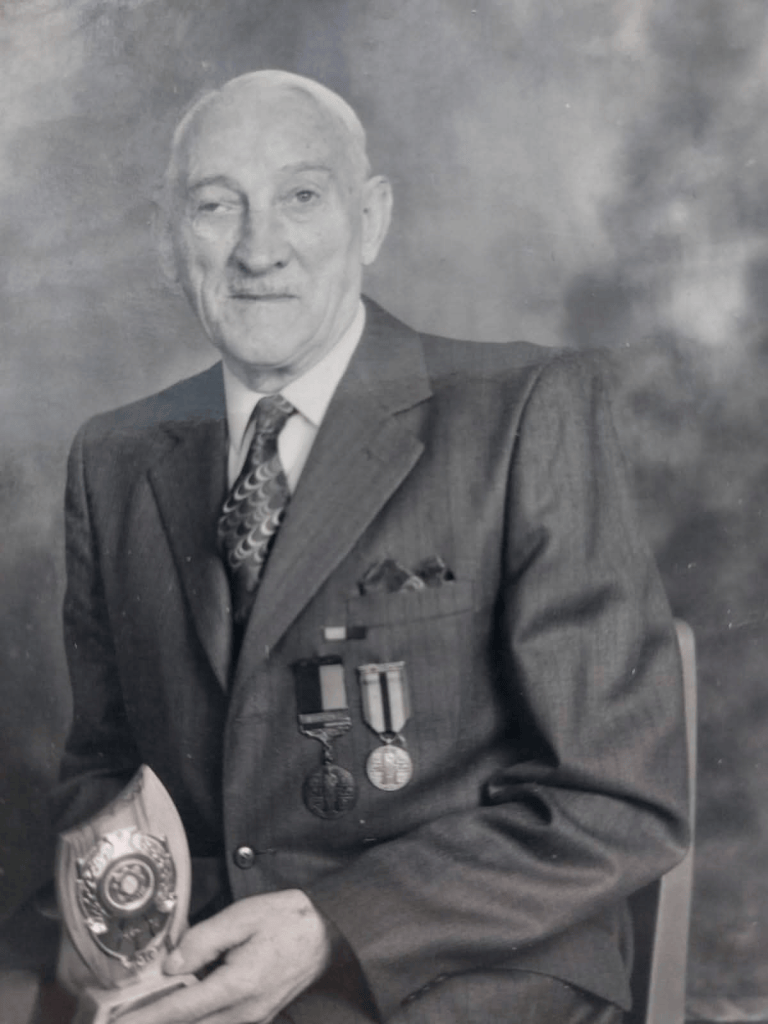
The photo below is of Captain Michael Greene married Elizabeth McFadden who was also prominent in the IRA in Liverpool.
1921 — The Irish Delegation Presents Its External Association Proposals
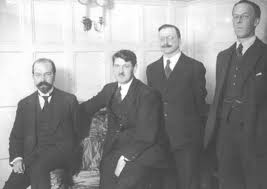
On 28 November 1921, during the Anglo-Irish Treaty negotiations, the Irish delegation presented the British representatives with a memorandum outlining its proposals for Ireland’s association with the British Commonwealth.
Under the proposed arrangement, Ireland would remain constitutionally independent while cooperating with Commonwealth countries on matters of common concern, including defence and international relations. The Crown would be recognised as a symbol of the association rather than as the source of British authority over Ireland.
The British government was unwilling to accept the central principle of external association. The disagreement remained one of the major constitutional obstacles during the final days of negotiations before the signing of the Anglo-Irish Treaty on 6 December 1921.
1921 — Fermanagh and Tyrone County Councils Declare Allegiance to Dáil Éireann
Also on 28 November 1921, Fermanagh and Tyrone county councils declared their allegiance to Dáil Éireann rather than recognising the authority of the newly established Northern Ireland government.
The declarations followed the transfer of significant administrative powers to the Northern Ireland government on 22 November. Other nationalist-controlled local authorities adopted similar positions.
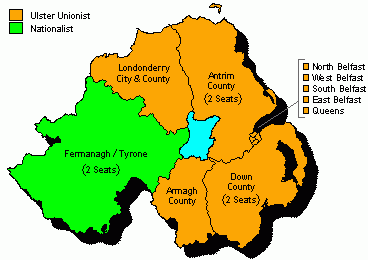
The Northern Ireland Minister for Home Affairs, Richard Dawson Bates, responded by pursuing legislation that enabled the government to dissolve local authorities that refused to recognise its jurisdiction.
The dispute demonstrated the extent of nationalist opposition to partition within Northern Ireland and the difficulties facing the new administration in securing the cooperation of nationalist-controlled councils.
1922 — George Gavan Duffy Challenges the Government’s Execution Policy
On 28 November 1922, controversy surrounding the execution of Erskine Childers and other anti-Treaty prisoners reached Dáil Éireann.
George Gavan Duffy, himself a signatory of the Anglo-Irish Treaty and a former Minister for Foreign Affairs, strongly criticised the government’s execution policy. His intervention demonstrated that opposition to the executions was not confined to anti-Treaty republicans.
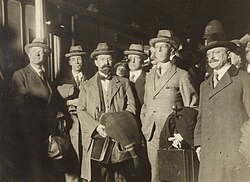
Government representatives, including Kevin O’Higgins, defended the measures as necessary to suppress armed resistance and establish the authority of the emerging Irish Free State.
The debate exposed deep divisions within the pro-Treaty political establishment over the use of military courts, capital punishment and emergency powers during the Civil War.
References
Barry, T. (1949) Guerrilla Days in Ireland. Dublin: Irish Press.
Coffey, P. (2021) This Day in Irish History: From the Social Media Sensation @thisdayirish. Dublin: The O’Brien Press.
Dictionary of Irish Biography (2009) ‘O’Connor, Roderick (“Rory”)’. Royal Irish Academy. Available at: https://www.dib.ie/biography/oconnor-roderick-rory-a6614
Dictionary of Irish Biography (2009) ‘Griffith, Arthur Joseph’. Royal Irish Academy. Available at: https://www.dib.ie/biography/griffith-arthur-joseph-a3644
Hart, P. (1998) The IRA and Its Enemies: Violence and Community in Cork, 1916–1923. Oxford: Clarendon Press.
Morrison, E. (2022) Kilmichael: The Life and Afterlife of an Ambush. Newbridge: Irish Academic Press.
RTÉ/Century Ireland (n.d.) ‘Explainer: The Kilmichael Ambush’. Available at: https://www.rte.ie/centuryireland/articles/explainer-the-kilmichael-ambush
RTÉ (2020) ‘Kilmichael Ambush: This means war’. Available at: https://www.rte.ie/news/2020/1128/1180962-kilmichael-this-means-war/
University College Cork (2020) ‘The War Escalates, November 1920’, Mapping the Irish Revolution. Available at: https://www.ucc.ie/en/theirishrevolution/collections/mapping-the-irish-revolution/the-war-esclates-november-1920/
History Ireland (2020) ‘The Kilmichael ambush and the outer limits of Irish historical revisionism’. Available at: https://historyireland.com/the-kilmichael-ambush-and-the-outer-limits-of-irish-historical-revisionism/
O’Halpin, E. and Ó Corráin, D. (2020) The Dead of the Irish Revolution. New Haven and London: Yale University Press.
Military Archives of Ireland (n.d.) Bureau of Military History, Witness Statement WS0814. Available at: https://bmh.militaryarchives.ie/reels/bmh/BMH.WS0814.pdf
Military Archives of Ireland (n.d.) Bureau of Military History, Witness Statement WS1535. Available at: https://bmh.militaryarchives.ie/reels/bmh/BMH.WS1535.pdf
RTÉ/Century Ireland (n.d.) ‘Football on Fire: The IRA war on Manchester City and United, 1920–21’. Available at: https://centuryireland.rte.ie/centuryireland/articles/football-on-fire-the-ira-war-on-manchester-city-and-united-1920-21
Documents on Irish Foreign Policy (1921) ‘Memorandum by the Irish delegates on their proposal for the association of Ireland with the British Commonwealth’, 28 November, Vol. 1, document 204. Available at: https://www.difp.ie/volume-1/1921/memorandum-by-the-irish-delegates-on-their-proposal-for-the-association-of-ireland-with-the-british-commonwealth/204/
Fermanagh and Omagh District Council (n.d.) ‘Timeline of Local and National Events 1921’. Available at: https://www.fermanaghomagh.com/services/arts-and-culture/timeline-of-local-events-1919-1923/timeline-1921/
RTÉ/Century Ireland (n.d.) ‘The Origins of Northern Ireland’. Available at: https://centuryireland.rte.ie/centuryireland/articles/the-origins-of-northern-ireland
Irish History 1919–1923 Chronology (n.d.) ‘November 1920’. Available at: https://irishhistory1919-1923chronology.ie/november_1920.htm
Irish History 1919–1923 Chronology (n.d.) ‘November 1921’. Available at: https://irishhistory1919-1923chronology.ie/november_1921.htm
Irish History 1919–1923 Chronology (n.d.) ‘November 1922’. Available at: https://irishhistory1919-1923chronology.ie/november_1922.htm


Leave a Reply