1920 — British Labour Commission Arrives in Ireland
On 30 November 1920, a commission established by the British Labour Party arrived in Dublin to investigate conditions in Ireland during the War of Independence. Led by Arthur Henderson MP, the delegation subsequently visited several parts of the country, gathering evidence concerning Crown-force reprisals, destruction of property and violence against civilians.
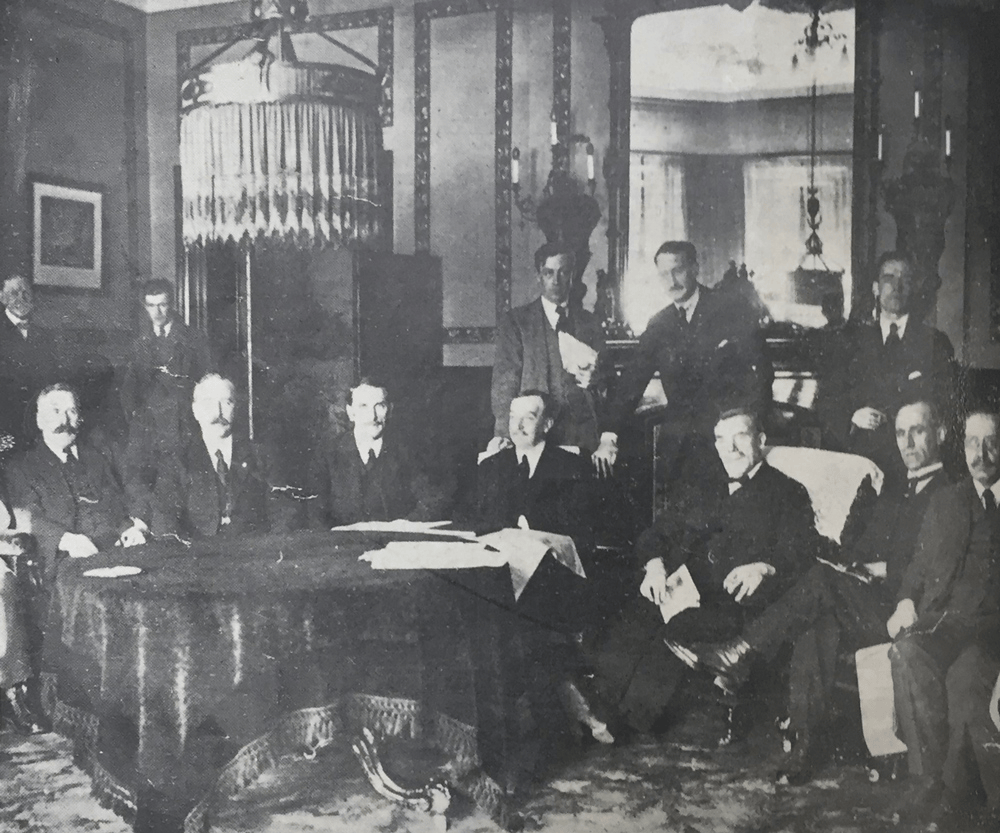
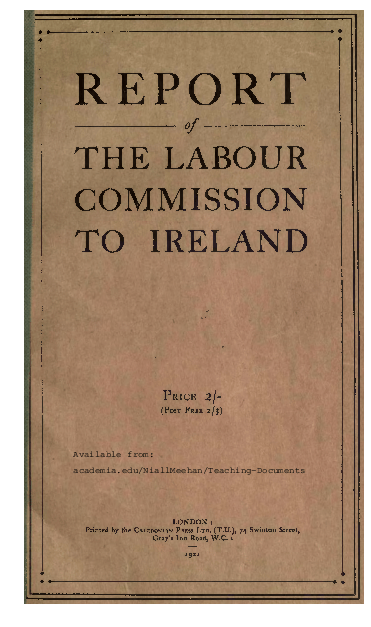
The commission had been established after the British government rejected Labour’s demand for an independent inquiry. Its findings, published in January 1921 in the Report of the Labour Commission to Ireland, provided a detailed record of conditions during the conflict and examined the prospects for a negotiated settlement.
1920 — Killing of Seán O’Carroll and Patrick Tierney in Ardee
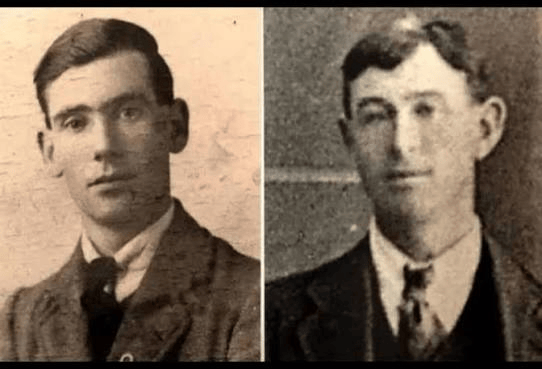
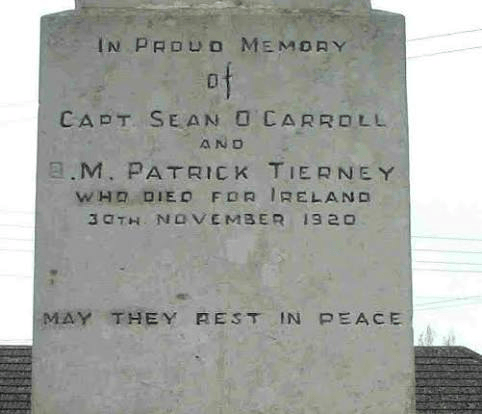
On 30 November 1920, two members of the IRA, Seán (John) O’Carroll and Patrick Tierney, were taken from their lodgings and shot dead by Crown forces in Ardee, County Louth.
O’Carroll was an officer in the South Louth IRA, while Tierney served as a quartermaster. Local historical accounts attribute their killings to the Black and Tans. Both men are commemorated by a memorial on the Drogheda Road in Ardee.
Their deaths occurred during a period of escalating violence and reprisals following Bloody Sunday and the Kilmichael Ambush.
1921 — De Valera Reviews IRA Volunteers in County Clare
On 30 November 1921, Éamon de Valera, Minister for Defence Cathal Brugha and IRA Chief of Staff Richard Mulcahy inspected contingents of the Mid-Clare Brigade at training camps in Kilnamona and Kilfenora.
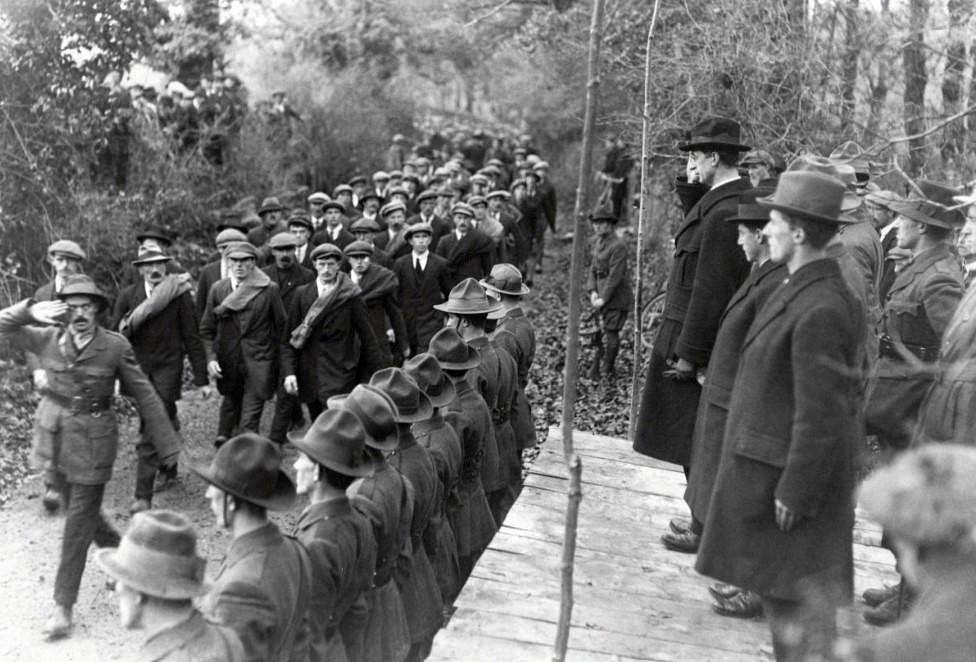
Speaking to the Volunteers, de Valera emphasised the importance of remaining committed to republican principles despite the possibility that the Anglo-Irish negotiations might break down.
Although the Truce had been in operation since July, the possibility of renewed conflict remained. The inspections took place less than a week before the signing of the Anglo-Irish Treaty.
1921 — James Craig Announces Expansion of the Ulster Special Constabulary
On 30 November 1921, the Belfast Telegraph reported that Northern Ireland Prime Minister James Craig had announced the immediate enrolment of 700 additional A Specials and 5,000 B Specials.
The announcement followed the transfer of responsibility for policing and law and order to the Northern Ireland government on 22 November, during a period of severe communal violence in Belfast.
The expansion of the Ulster Special Constabulary strengthened the security apparatus of the newly established Northern Ireland administration, although the organisation was regarded with considerable distrust by the nationalist population.
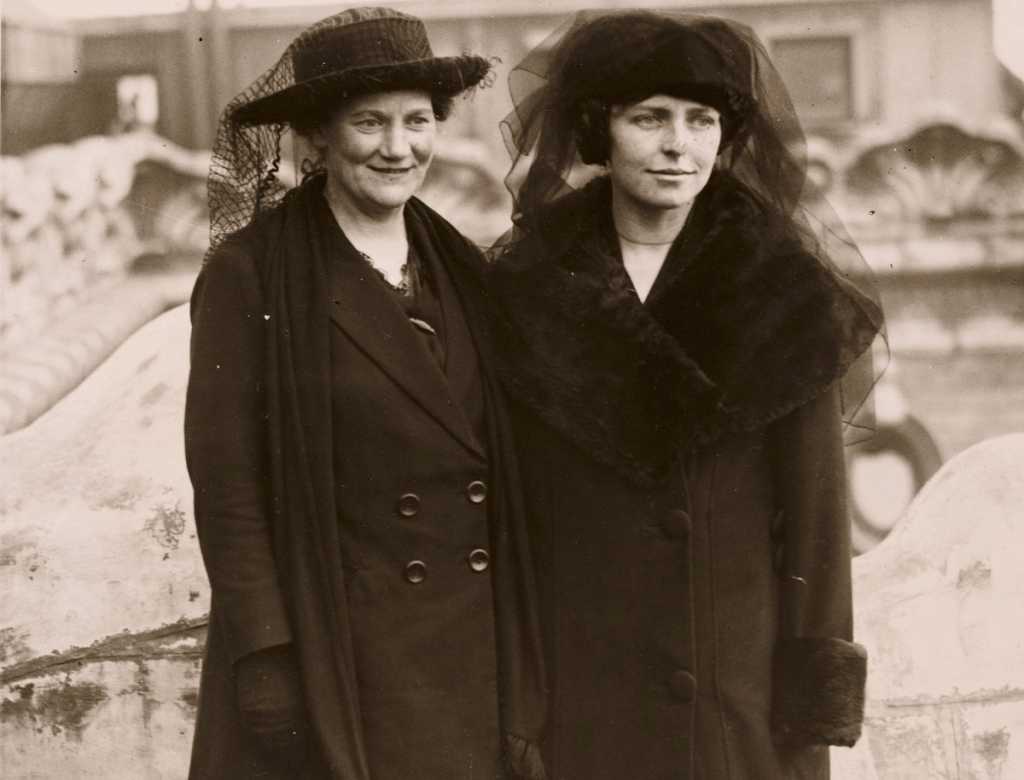
1922 — Australian Cumann na mBan Protests to W. T. Cosgrave
On 30 November 1922, the Melbourne newspaper The Advocate reported that the Sydney Ethna Carbery branch of Cumann na mBan had sent a cable of protest to W. T. Cosgrave, head of the Irish Provisional Government, concerning the treatment of republican women imprisoned during the Civil War.
Cumann na mBan had been founded on 2 April 1914 to support the Irish Volunteers. During the War of Independence, its members carried dispatches, gathered intelligence, provided medical assistance and supported republican prisoners. Following the signing of the Anglo-Irish Treaty, the organisation overwhelmingly rejected the agreement.
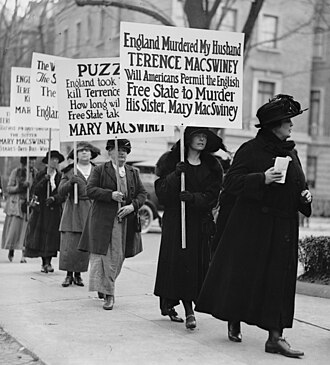
The Australian protest was prompted particularly by reports of the deteriorating health of Mary MacSwiney, a prominent anti-Treaty republican who had undertaken a hunger strike while imprisoned in Mountjoy. News of her subsequent release and the execution of Erskine Childers on 24 November reached Australia around the same period.
The cable demonstrated the continuing involvement of the Irish diaspora in republican politics and the efforts of women overseas to influence events in Ireland.
1922 — Three Republican Prisoners Executed at Beggars Bush Barracks
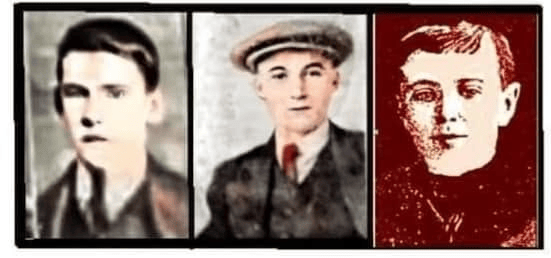
On 30 November 1922, three anti-Treaty IRA members — Patrick Farrelly, John Murphy and Joseph Spooner — were executed by firing squad at Beggars Bush Barracks in Dublin.
The men had been arrested following an incident involving an attempted attack on Oriel House, the headquarters of the Criminal Investigation Department, on 30 October 1922. They were subsequently sentenced to death by military courts.
When news of the executions was announced in Dáil Éireann, Labour Party leader Thomas Johnson strongly condemned the government’s actions and demanded that military trials be conducted publicly.
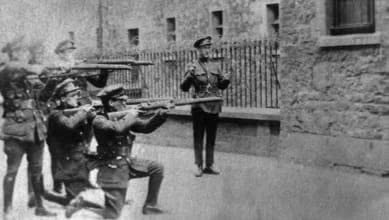
The executions intensified parliamentary opposition to the government’s use of capital punishment and became part of one of the most controversial policies of the Irish Civil War.
References
British Labour Party (1921) Report of the Labour Commission to Ireland. London: Labour Party. Available at: https://archive.org/details/reportoflabourco00labouoft
RTÉ/Century Ireland (2020) ‘British Labour Commission gathers evidence of reprisals in Ireland’. Available at: https://www.rte.ie/centuryireland/articles/british-labour-commission-gathers-evidence-of-reprisals-in-ireland
Military Archives of Ireland (n.d.) ‘Tierney, Patrick’, Military Service Pensions Collection: War of Independence Fatalities. Available at: https://staging.militaryarchives.ie/en/online-collections/military-service-pensions-collection/war-of-independence/fatalities/tierney-patrick
Dundalk Democrat (2023) ‘Ardee commemorates Seán O’Carroll and Patrick Tierney’. Available at: https://www.dundalkdemocrat.ie/news/photos-ardee-commemorates-sean-ocarroll-and-patrick-tierney-7276680
Irish War Memorials (n.d.) ‘O’Carroll and Tierney Memorial, Ardee’. Available at: https://irishwarmemorials.ie/wp-content/uploads/pdf/285.pdf
O’Halpin, E. and Ó Corráin, D. (2020) The Dead of the Irish Revolution. New Haven and London: Yale University Press.
Clare Libraries (n.d.) ‘July 1921–May 1923: Truce, Treaty and Civil War’, Witness to War: Commandant Seamus Hennessy. Available at: https://clarelibraries.ie/localstudies/history/1916-war-of-independence-and-civil-war-in-clare/witness-to-war-1917-1923-commandant-seamus-hennessy/truce-treaty-and-civil-war/
RTÉ/Century Ireland (n.d.) ‘30 November 1922: Cumann na mBan’s Telegram to W. T. Cosgrave’. Available at: https://www.rte.ie/centuryireland/articles/30-november-1922-cumann-na-mbans-telegram-to-w.t.-cosgrave
Mná 100 (n.d.) ‘Executive of Cumann na mBan’. Available at: https://www.mna100.ie/centenary-moments/can-you-help-identify-the-missing-women-2/
University College Cork (n.d.) ‘Cumann na mBan and the War of Independence’, Mapping the Irish Revolution. Available at: https://www.ucc.ie/en/theirishrevolution/collections/mapping-the-irish-revolution/cumann-na-mban-and-the-war-of-independence/
RTÉ History (2022) ‘Soldiers of the Revolution: Cumann na mBan and the Civil War’. Available at: https://www.rte.ie/history/battle-of-dublin/2022/0613/1304606-soldiers-of-the-revolution-cumann-na-mban-and-the-civil-war/
Cork Public Museum (n.d.) ‘By a Treaty Divided: The Civil War in Cork’. Available at: https://www.corkcity.ie/en/cork-public-museum/exhibitions/past-present-exhibitions/by-a-treaty-divided-the-civil-war-in-cork/
University College Cork (n.d.) Atlas of the Irish Revolution: The Treaty and Civil War. Available at: https://www.ucc.ie/en/media/projectsandcentres/irishrevolution/documents/U8.LCWORKSHEETS-THETREATYANDCIVILWAR%28P.2%29.pdf
Irish History 1919–1923 Chronology (n.d.) ‘November 1920’. Available at: https://irishhistory1919-1923chronology.ie/november_1920.htm
Irish History 1919–1923 Chronology (n.d.) ‘November 1921’. Available at: https://irishhistory1919-1923chronology.ie/november_1921.htm
Irish History 1919–1923 Chronology (n.d.) ‘November 1922’. Available at: https://irishhistory1919-1923chronology.ie/november_1922.htm


Leave a Reply